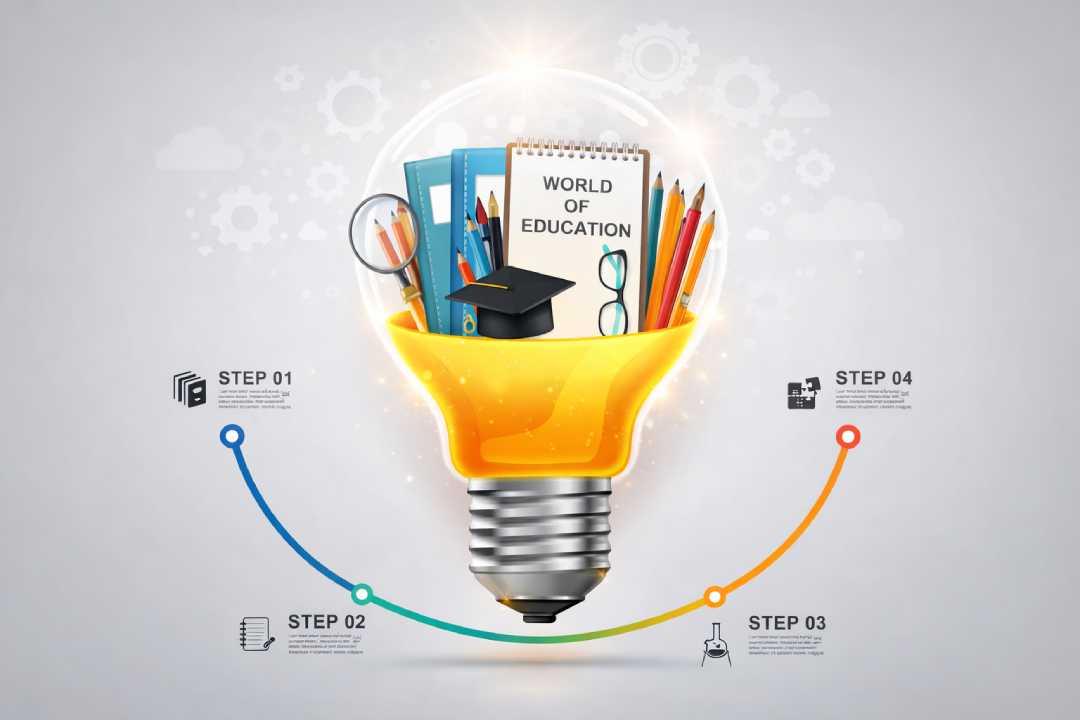
Round Rock Journal – Light Education via Infographics has emerged as a powerful approach to simplify complex information in the modern digital era. At its core, this concept combines visual storytelling with concise explanations, allowing readers to grasp ideas quickly without feeling overwhelmed. In many cases, people struggle to absorb dense academic text. Therefore, visual learning tools such as infographics provide an accessible alternative. Instead of reading long paragraphs filled with technical language, audiences can interpret diagrams, icons, and structured visuals. Consequently, information becomes easier to digest and remember. Many educators and content creators now rely on this method to communicate knowledge more effectively. From personal experience in content publishing, visual content often increases engagement significantly compared to traditional text. As a result, Light Education via Infographics has become a strategic method for delivering knowledge in a fast-paced information environment. Not only does it simplify ideas, but it also encourages curiosity and deeper exploration of topics.
“Read Also: Marc Marquez’s Response to Pedro Acosta Being Called His Successor“
Why Visual Learning Improves Knowledge Retention
Visual learning plays a crucial role in how people process and retain information. Studies in cognitive science suggest that the human brain processes visual content much faster than written text. Because of this ability, infographics help transform abstract ideas into clear visual patterns. For example, when data appears as charts or diagrams, readers can instantly identify relationships between variables. Moreover, visual cues such as color, shape, and spatial arrangement guide attention toward the most important points. Consequently, the learning process becomes more intuitive and less mentally exhausting. In educational settings, teachers increasingly use visual tools to explain complicated subjects such as science or economics. Similarly, digital publishers adopt infographics to improve reader engagement. From a practical perspective, visual learning reduces cognitive load while increasing comprehension speed. Therefore, Light Education via Infographics becomes an ideal method for modern learners who prefer concise and visually structured information.
The Rise of Infographics in Digital Education
Over the past decade, digital platforms have dramatically transformed the way people consume educational content. Traditional long-form articles still have value. However, modern audiences often prefer faster ways to understand information. As a result, infographics have become widely used in online education, social media, and digital marketing. Platforms such as Instagram, Pinterest, and LinkedIn frequently showcase educational infographics that summarize complex topics in seconds. Furthermore, many online learning platforms integrate visual diagrams into their course materials. This trend reflects a broader shift toward micro-learning, where information is delivered in smaller, more digestible segments. In this context, Light Education via Infographics perfectly aligns with changing user behavior. People want clarity without sacrificing depth. Therefore, well-designed infographics act as bridges between detailed knowledge and quick understanding. In my observation, articles that include visual explanations tend to reach wider audiences because they combine clarity with visual appeal.
Key Elements That Make an Infographic Effective
Although infographics appear simple, creating an effective one requires careful design thinking. First, clarity must remain the top priority. Too much information can overwhelm readers and defeat the purpose of visual learning. Therefore, designers should focus on highlighting essential insights rather than including every detail. Second, visual hierarchy guides the reader through the information logically. Titles, icons, and color contrasts help structure the narrative. Third, consistency in typography and color creates a professional appearance. Moreover, good infographics balance aesthetics and functionality. They should look attractive while remaining easy to interpret. In addition, storytelling plays a critical role in infographic design. A successful infographic leads readers from problem to explanation and finally to insight. Because of these principles, Light Education via Infographics becomes more than decorative visuals. Instead, it transforms information into a guided learning experience that encourages readers to explore ideas further.
How Infographics Simplify Complex Information
One of the greatest strengths of Light Education via Infographics lies in its ability to simplify complicated ideas. Many subjects, such as economics, technology, or health science, involve intricate relationships between variables. Explaining these topics solely through text often requires long explanations. However, visual diagrams can instantly illustrate connections between elements. For instance, a process infographic can show the stages of a system step by step. Likewise, statistical infographics can display large datasets through graphs or charts. Consequently, readers quickly recognize patterns and trends without analyzing raw numbers. This approach is especially useful for beginners who may feel intimidated by technical topics. From a communication perspective, simplicity does not mean reducing accuracy. Instead, it means presenting information in a more accessible format. Therefore, infographics serve as translators that convert complex knowledge into clear visual narratives.
“Read Also: Music as a Form of Personal Expression and Development“
The Role of Infographics in Social Media Education
Social media platforms have dramatically accelerated the popularity of infographic-based learning. Today, millions of users scroll through short-form educational content every day. Because attention spans are shorter online, visual summaries capture interest more effectively than long text blocks. Infographics fit perfectly within this environment. They present key insights in a format that is easy to share and visually engaging. As a result, educational content spreads faster across digital communities. Many organizations now publish infographic series explaining topics such as financial literacy, health awareness, and technology trends. Moreover, audiences often save and share these visuals for later reference. In my experience working with digital content strategies, infographics significantly increase user interaction and retention. Therefore, Light Education via Infographics is not only a teaching method but also a powerful communication strategy in the social media era.
Benefits of Infographic-Based Learning for Beginners
Beginners often struggle when approaching new or technical subjects. Dense academic language and lengthy explanations can discourage early learners. However, infographic-based learning reduces these barriers by presenting information visually. Instead of reading multiple pages of text, learners can start with simple visual summaries. Gradually, they can explore deeper explanations once the basic concept becomes clear. This layered learning approach improves confidence and motivation. Additionally, infographics support different learning styles. Some individuals understand information better through visuals rather than text. Therefore, visual education makes learning more inclusive. Another advantage involves memory retention. Visual patterns and color associations help learners recall information more easily. Because of these benefits, Light Education via Infographics provides a gentle entry point for beginners exploring new fields of knowledge.
The Future of Light Education via Infographics
Looking ahead, Light Education via Infographics will likely become even more influential in digital learning ecosystems. Advances in design software and data visualization tools already allow creators to produce interactive and animated infographics. Consequently, educational visuals can now respond to user input and display dynamic information. In addition, artificial intelligence is beginning to assist in generating visual explanations from complex datasets. These innovations expand the potential of infographic-based education. However, the fundamental principle remains unchanged. Effective learning depends on clarity, storytelling, and thoughtful design. As information continues to grow exponentially, the ability to simplify ideas becomes increasingly valuable. In this context, Light Education via Infographics represents a practical solution for modern learners who seek knowledge quickly yet meaningfully. By combining visual clarity with structured insights, this approach will continue shaping the future of accessible education.