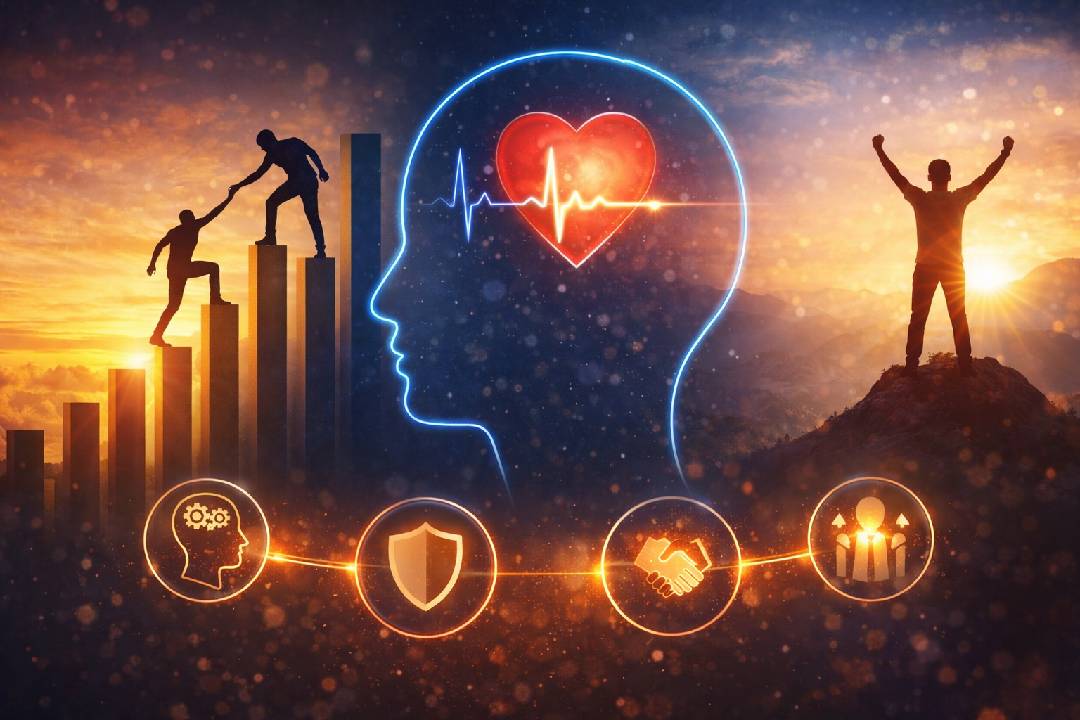
Round Rock Journal – Emotional intelligence (EI) is an essential skill that can significantly impact your personal growth. Unlike traditional intelligence, EI focuses on the ability to understand, manage, and use emotions effectively in various situations. This skill is crucial in both personal and professional settings. In today’s fast-paced world, being emotionally intelligent helps individuals navigate challenges, build meaningful relationships, and enhance decision-making abilities. Emotional intelligence allows individuals to recognize and manage their emotions while understanding others’ emotions, which is vital for growth.
“Read Also: Missed the Big 2025 Stock Market Rally? It’s Not Too“
The Core Elements of Emotional Intelligence
Emotional intelligence consists of five core components self-awareness, self-regulation, motivation, empathy, and social skills. These elements work together to help individuals understand their emotions and the emotions of others. Self-awareness refers to recognizing your emotions and how they affect your thoughts and actions. Self-regulation involves controlling your emotions and reactions, especially in stressful situations. Motivation is the drive to pursue goals with energy and persistence. Empathy allows individuals to understand and share the feelings of others, fostering strong interpersonal relationships. Finally, social skills help in managing relationships and communicating effectively.
How Emotional Intelligence Enhances Decision Making
One of the key areas where emotional intelligence makes a significant difference is in decision-making. With a high level of EI, individuals can make better, more balanced decisions by considering both emotional and logical factors. Emotional intelligence helps prevent impulsive decisions driven by temporary emotions, such as anger or stress. Instead, individuals with high EI take a step back, reflect on their feelings, and choose responses that align with their values and long-term objectives.
Emotional Intelligence and Relationship Building
Strong relationships are built on understanding, empathy, and effective communication, all of which are aspects of emotional intelligence. In both personal and professional relationships, emotional intelligence helps individuals listen actively, communicate clearly, and respond thoughtfully to others’ needs. By managing emotions effectively and recognizing the emotional needs of others, emotionally intelligent individuals foster trust, respect, and collaboration. These qualities are essential for successful partnerships, friendships, and even team dynamics.
The Role of EI in Conflict Resolution
Conflict is inevitable in every aspect of life, but emotional intelligence can play a pivotal role in resolving disputes. People with high emotional intelligence are better at staying calm during conflicts, understanding the perspective of others, and finding solutions that benefit everyone involved. Rather than reacting impulsively, they approach disagreements with empathy and open-mindedness, enabling them to resolve issues more peacefully and constructively. Emotional intelligence provides individuals with the tools to manage their emotions and those of others effectively during tense moments.
The Impact of Emotional Intelligence on Leadership
Leaders with high emotional intelligence are more likely to inspire and motivate their teams. Emotional intelligence enables leaders to understand and respond to the needs of their employees, making them more approachable and supportive. Emotional intelligence also plays a key role in decision-making, empathy, and conflict management, which are crucial skills for effective leadership. Leaders who possess high EI can build strong, cohesive teams, creating an environment of mutual respect and trust that drives productivity and success.
“Read Also:Build Small Habits for Success in the Modern Era“
Developing EI: Steps You Can Take
Developing emotional intelligence is a lifelong journey that requires patience and practice. Here are a few practical steps to enhance your EI:
- Practice self-awareness: Regularly reflect on your emotions and actions.
- Enhance empathy: Listen actively and try to understand others’ feelings and perspectives.
- Regulate your emotions: Learn techniques to manage stress and stay calm under pressure.
- Develop social skills: Focus on improving your communication and relationship-building abilities.
By focusing on these areas, you can improve your EI and harness its power for personal and professional growth.
The Link Between EI and Personal Growth
EI is one of the most important factors in personal development. High EI contributes to better self-esteem, improved interpersonal relationships, and enhanced mental well-being. EI helps individuals manage their thoughts and emotions effectively, which is essential for overcoming challenges and achieving personal goals. By being emotionally intelligent, individuals can unlock their full potential and create a more fulfilling and balanced life.
The Power of Emotional Intelligence for Personal Growth
Emotional intelligence is a powerful tool that plays a significant role in personal growth. From enhancing decision-making and relationship-building to fostering effective leadership and conflict resolution, EI is essential for navigating life’s challenges. By continuously developing EI, individuals can experience greater success, satisfaction, and well-being. Investing in EI not only benefits you but also positively impacts those around you, helping you create stronger connections and lead a more meaningful life.