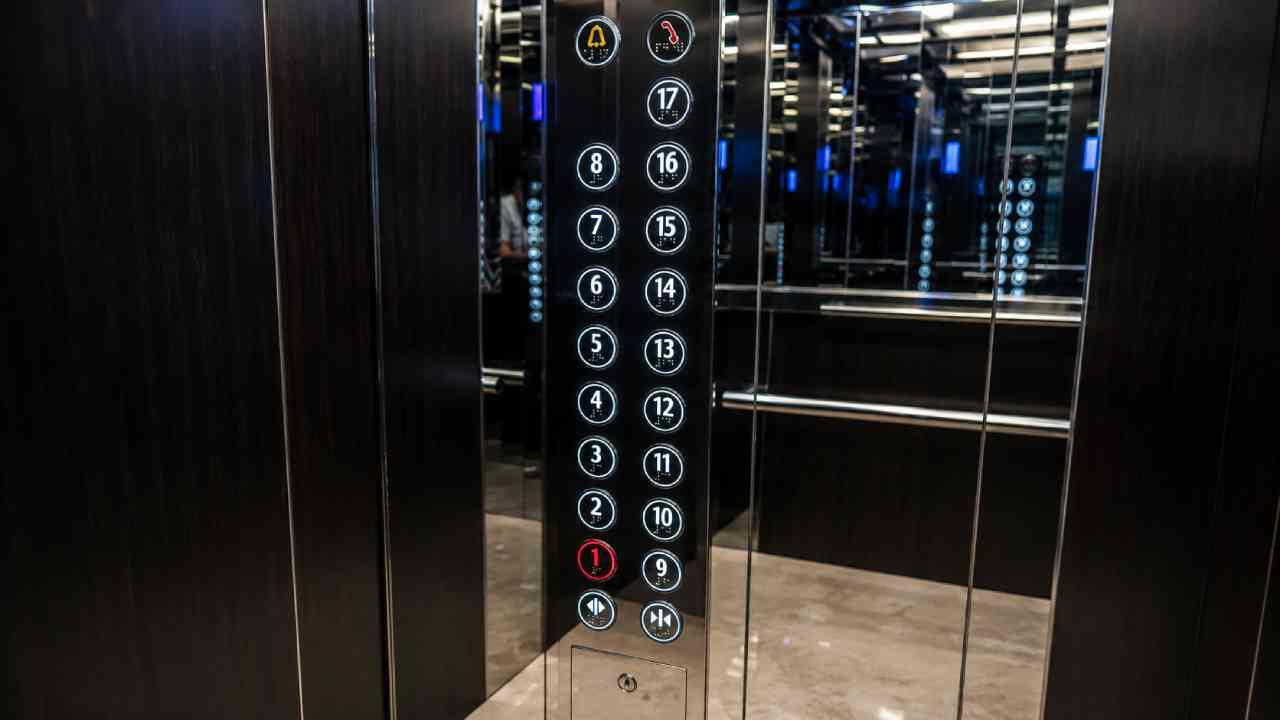
Round Rock Journal – An elevator ride feels almost effortless. You step inside, press a button, and wait until the doors open at your destination. However, several systems begin working immediately after that simple press. Modern elevators rely on controllers, sensors, motors, position information, and safety systems to manage each trip. The elevator does not “think” about your destination like a person would. Instead, it receives a request and processes it through its control system. In buildings with several elevators, the process can become even smarter. A control system may decide which car should answer a call based on location, direction, and existing requests. Therefore, what appears to be a simple vertical journey is actually a carefully coordinated process. Understanding how it works reveals an interesting piece of engineering hidden inside an everyday experience.
Read Also: Rupiah Exchange Rate Today: Dollar Remains Strong at Mandiri, BCA, and BNI
What Happens When You Press an Elevator Button?
Pressing an elevator button creates an electronic request for the control system. If you are already inside the car, the selected floor becomes a destination request. Meanwhile, hallway buttons usually tell the system that someone wants to travel up or down. The controller then considers that request alongside other active calls. For example, imagine the elevator is traveling upward from the second floor. You enter and select floor eight. The controller records that destination and continues managing the movement of the car. However, it may need to stop at another requested floor first. This is why pressing a button does not directly control the motor. Instead, the button communicates your request to a larger system. That distinction is important because modern elevators must coordinate movement while maintaining safe door operation, accurate stopping, and efficient service.
The Elevator Controller Acts Like the System’s Brain
At the center of the system is the elevator controller. You can think of it as the coordinator that manages information and commands throughout the ride. It processes floor requests while tracking the car’s movement and operational status. In addition, it works with systems that control doors, acceleration, deceleration, and stopping. The controller also has to respect safety conditions before normal movement can occur. For instance, an elevator should not begin a normal trip while its doors are improperly secured. Modern systems can use computerized controls to manage these tasks rapidly. However, the exact technology varies depending on the elevator’s age, design, and manufacturer. Therefore, not every elevator works in precisely the same way. The basic principle remains similar: requests enter the control system, information is evaluated, and commands are sent to the appropriate components.
How Does an Elevator Know Its Current Position?
Knowing the requested destination is only half the challenge. The elevator also needs reliable information about where the car is located. Modern systems can use encoders and other position-sensing equipment to track movement within the shaft. An encoder can provide information related to the motion of the drive system. Meanwhile, additional reference or positioning devices may help the system determine where the car should slow and stop. This information allows the controller to compare the current position with the requested destination. As the elevator approaches a selected floor, the drive system reduces speed until the car reaches the correct stopping position. Accurate leveling is particularly important because the elevator floor should align closely with the building floor. Otherwise, even a small height difference could create an uncomfortable or potentially hazardous step for passengers.
Why Doesn’t an Elevator Follow the Order of Button Presses?
Imagine passengers select floors 3, 10, 5, and 8 in that order. You might expect the elevator to follow exactly the same sequence. However, doing so could create an inefficient journey. If the car is moving upward, a conventional control strategy can serve upward destinations in ascending order. Therefore, the route might become floors 3, 5, 8, and 10. After completing suitable upward requests, the elevator can later change direction to handle other calls. This approach reduces unnecessary reversals. It also helps passengers reach their floors more efficiently. Of course, actual dispatch logic can be much more sophisticated, especially in busy buildings. Nevertheless, the basic idea explains something many passengers notice: elevator buttons represent requested stops, not necessarily a strict chronological playlist. The controller decides how those requests should fit into the current journey.
How Does the Elevator Stop at Exactly the Right Floor?
Stopping a moving elevator smoothly requires more than simply turning off a motor at the destination. The system needs to manage speed as the car approaches the correct position. Modern traction elevators often use controlled electric drives that allow gradual acceleration and deceleration. Position and movement information helps determine when the car should begin slowing down. Consequently, passengers experience a relatively smooth transition from travel speed to a complete stop. Once the car reaches the appropriate landing position and required conditions are satisfied, the doors can open. This precise sequence happens repeatedly throughout the day in busy buildings. From a passenger’s perspective, it may seem completely ordinary. From an engineering perspective, however, accurate stopping demonstrates how mechanical components, electronic controls, sensors, and software work together. The best technology often becomes almost invisible when it performs reliably.
How Buildings With Several Elevators Choose the Right Car
The process becomes more interesting when a building has several elevators. When someone presses a hallway call button, the system must decide which elevator should respond. Sending the physically closest car is not always the most efficient choice. Suppose one elevator is nearby but already moving away with several scheduled stops. Another may be slightly farther away but traveling toward the passenger with fewer requests. Depending on the control system, factors such as direction, current calls, car position, and traffic patterns can influence dispatching. The objective is generally to provide efficient service across the whole elevator group rather than optimize only one passenger’s trip. This explains why the elevator that arrives may not always be the car you expected. Behind the doors, a dispatch system may be coordinating several journeys at the same time.
Read Also: Life After Ambition: What Happens When You Finally Reach Your Goals?
Destination Control Makes Elevators Even Smarter
Some modern buildings use a system known as destination control. Instead of entering an elevator and then selecting a floor, passengers choose their destination before boarding. The system assigns them to a particular elevator. For example, you might select floor 28 on a lobby panel and receive an instruction to use car C. Other passengers traveling to the same floor or nearby destinations can be grouped with you. As a result, the assigned car may need fewer intermediate stops. This differs from the traditional system, where passengers enter whichever elevator arrives and then choose their destinations inside. Destination control can be particularly useful in busy high-rise buildings because it gives the system more information before passengers board. However, its effectiveness still depends on building design, traffic patterns, system configuration, and user behavior.
Safety Systems Work Alongside Every Normal Journey
Efficiency matters, but safety is fundamental to elevator operation. Elevators incorporate multiple safety-related systems rather than depending on a single component. Door interlocks, braking systems, speed monitoring, and other protective mechanisms can all play important roles depending on the elevator design. For example, door interlocks help prevent normal car movement when landing doors are not properly secured. Elevators also include systems intended to manage abnormal operating conditions. Furthermore, regular inspection and maintenance are important because elevators combine mechanical, electrical, and electronic components. This is why the technology should not be understood simply as a motor pulling a box through a shaft. A modern elevator is a coordinated transportation system with layers of control and protection. Passengers rarely notice these systems during an ordinary ride, which is exactly how reliable safety engineering often feels.
Why Elevator Technology Is More Complex Than It Appears
The fascinating thing about an elevator is the contrast between the passenger experience and the technology behind it. For us, the process involves only a few actions: call the elevator, enter, select a floor, and leave. Behind that simplicity, the system must process requests, determine position, control motion, manage doors, and respond to safety conditions. In multi-car buildings, it may also coordinate several elevators simultaneously. Moreover, newer destination-based systems can organize passengers before they even enter the car. This complexity demonstrates an important lesson about everyday technology. Many devices appear simple because engineers have successfully hidden complicated processes behind intuitive controls. The elevator button is a perfect example. One small press communicates a request to an entire network of systems that work together to deliver a smooth vertical journey.