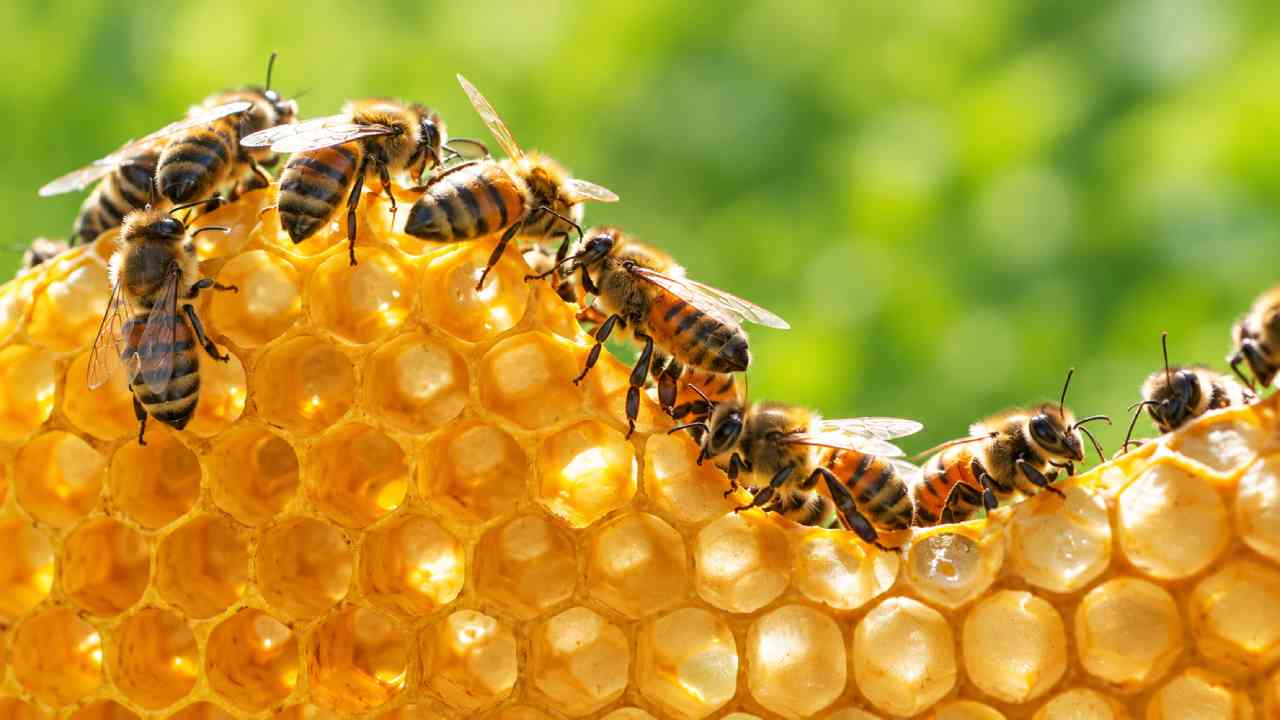
Round Rock Journal – A honey bee can leave its colony, travel across a busy landscape, visit flowers, and still return to its hive. That ability may seem simple until we consider how small a bee actually is. Bees find their way by combining several types of information rather than following one invisible route. They can use the position of the Sun, visual landmarks, memories, and patterns of polarized light in the sky. Together, these clues create an effective navigation system. Young worker bees also perform orientation flights near their colony. During these flights, they learn important features around the hive. Trees, vegetation, buildings, and other visible objects can become useful reference points. Therefore, a bee does not simply fly without direction and hope to reach home. Its tiny brain processes environmental information surprisingly well. This ability allows foraging bees to explore their surroundings while maintaining a reliable connection with their colony.
Read Also: Rupiah Nears 18,000 per US Dollar as Global Pressure Builds
The Sun Works Like a Natural Compass in the Sky
One important navigation tool comes from above. Bees can use the Sun as a compass while traveling between flowers and their colony. However, the Sun does not remain in the same position throughout the day. Bees can account for its movement as time passes. This ability helps them maintain useful directional information during foraging trips. Even more impressively, bees can use patterns of polarized light in the sky. These patterns can provide directional clues when direct sunlight is less obvious. Therefore, navigation does not depend entirely on seeing a bright Sun in a perfectly clear sky. Researchers have studied these abilities for decades because they reveal how sophisticated insect navigation can be. When bees find a valuable food source, remembering its direction becomes important. A successful worker needs to return to the colony afterward. It may also communicate useful information about that food source to other members of the hive.
Familiar Landmarks Help Bees Recognize Their Neighborhood
Imagine leaving home without street names, maps, or a smartphone. Humans might quickly become confused. Bees solve the problem differently. During their journeys, they can learn visual features of the landscape surrounding their colony. A distinctive tree, hedge, building, or other feature may become part of their spatial memory. As a result, familiar surroundings help guide them when they return from collecting food. Orientation flights are especially important for young foragers. During these flights, bees move around the hive while learning what the area looks like from different directions. Later, those memories can support navigation over greater distances. This explains why bees find familiar environments easier to navigate than completely unknown surroundings. However, their navigation system is not identical to a human map. Bees combine several sensory clues and learned information. That flexible approach gives them a surprisingly powerful way to travel through a complex landscape and eventually recognize home again.
Bees Can Share Directions Through a Remarkable Dance
Finding food is useful, but telling the colony about it can make the discovery even more valuable. Honey bees have an extraordinary communication behavior known as the waggle dance. A successful forager can perform this dance after returning to the hive. The movement provides other bees with information related to the direction and distance of a food source. The orientation of the dance carries directional information in relation to the Sun. Meanwhile, characteristics of the waggle portion help communicate distance. Other workers can then leave the colony and search for the resource. This behavior does not mean every bee follows an exact set of GPS-style coordinates. Instead, the dance provides information that helps guide their search. Moreover, odor and environmental clues can assist them once they approach the area. The waggle dance demonstrates that bees find resources through both individual navigation and social communication. Their colony works as a connected community rather than a collection of isolated insects.
Why Do Bees Sometimes Attack or Sting People?
Despite their reputation, most bees do not spend their day searching for humans to attack. Foraging workers are usually interested in flowers, nectar, pollen, water, and returning safely to the colony. Defensive behavior becomes more likely when a bee or its colony perceives danger. For example, disturbing a hive can trigger a stronger response than simply observing a bee on a flower. Sudden movements close to a colony may also increase defensive activity. Different bee species and colonies can show different levels of defensiveness. Therefore, describing all bees as naturally aggressive would be misleading. Honey bees mainly use stinging as a defense mechanism. From the colony’s perspective, protecting the queen, brood, stored food, and hive is essential for survival. Humans may see an attacking bee as aggressive. However, the bee may be responding to what it interprets as a serious threat. Understanding this difference helps explain why keeping distance from an active hive is important.
Alarm Signals Can Bring More Bees Into a Defensive Response
One sting can sometimes make a dangerous encounter worse. Honey bees can release alarm pheromones during defensive situations. These chemical signals help alert nearby colony members to a possible threat. Consequently, other bees may become more defensive around the same target or area. This is one reason people should avoid swatting repeatedly at bees during an encounter. Fast movements may not solve the situation and can increase disturbance. If many bees become defensive, reaching a protected indoor space or enclosed vehicle is generally safer than remaining close to the colony. Multiple stings can become medically serious. In addition, a person with a severe allergy can experience anaphylaxis even after a sting. Difficulty breathing, swelling of the tongue or throat, fainting, or other severe symptoms require emergency medical attention. Therefore, bee defense should never be treated as a harmless curiosity. Their behavior is fascinating to study, but an active swarm or disturbed colony deserves distance and caution.
Read Also: You Are Allowed to Build a Life at Your Own Pace
Are Bees Actually Afraid of Water?
People sometimes notice that spraying water causes flying insects to scatter. This can create the impression that bees are naturally afraid of water. However, that explanation is too simple. Bees actually need water and workers can actively collect it for their colony. Water contributes to important hive activities, including temperature regulation. The real problem is that becoming soaked or trapped in water can make flight difficult. A bee’s wings need to function effectively for the insect to remain airborne. Falling into deep water can therefore become dangerous. Bees often benefit from shallow drinking locations with stones, edges, or other surfaces where they can land safely. For this reason, saying that bees “hate” or “fear” water does not accurately describe their behavior. Water can disrupt flying bees under some circumstances, but it should not be treated as a guaranteed method for stopping an attack. Distance and secure shelter remain far more important during a dangerous encounter.
A Bee Swarm Can Become a Serious Safety Situation
Seeing one bee near a flower is very different from being surrounded by many defensive bees. When numerous bees repeatedly sting someone, the situation can become an emergency. Severe allergic reactions are one concern. However, a very large number of stings can also expose a person to a substantial amount of venom. Therefore, escaping the immediate area becomes the priority. Running toward an enclosed building or vehicle can provide physical protection. Jumping into a swimming pool or another body of water is not a dependable solution. Bees may remain nearby, while the person still needs to surface and breathe. Once the person reaches safety, remaining stingers should be removed promptly. Medical help is especially important when there are many stings or signs of a severe reaction. Learning why bees find their way home and defend their colony is fascinating. Yet understanding how to respond safely around defensive bees is equally valuable.
Tiny Brains Can Produce Surprisingly Complex Behavior
Bees remind us that intelligence in nature does not always require a large brain. These small insects can learn landmarks, use celestial information, communicate about food, remember useful locations, and coordinate life within a colony. At the same time, their defensive behavior serves a practical biological purpose. A hive contains valuable resources and developing young, so protecting it can determine whether the colony survives. Water adds another interesting part to the story. Bees need it, yet being trapped or heavily soaked can interfere with their movement and flight. Therefore, their relationship with water is more complicated than simple fear. When we examine how bees find home, communicate, gather resources, and react to danger, an ordinary backyard insect suddenly becomes much more interesting. The lesson is also simple: understanding animal behavior can replace common myths with useful knowledge while helping people interact with wildlife more safely.