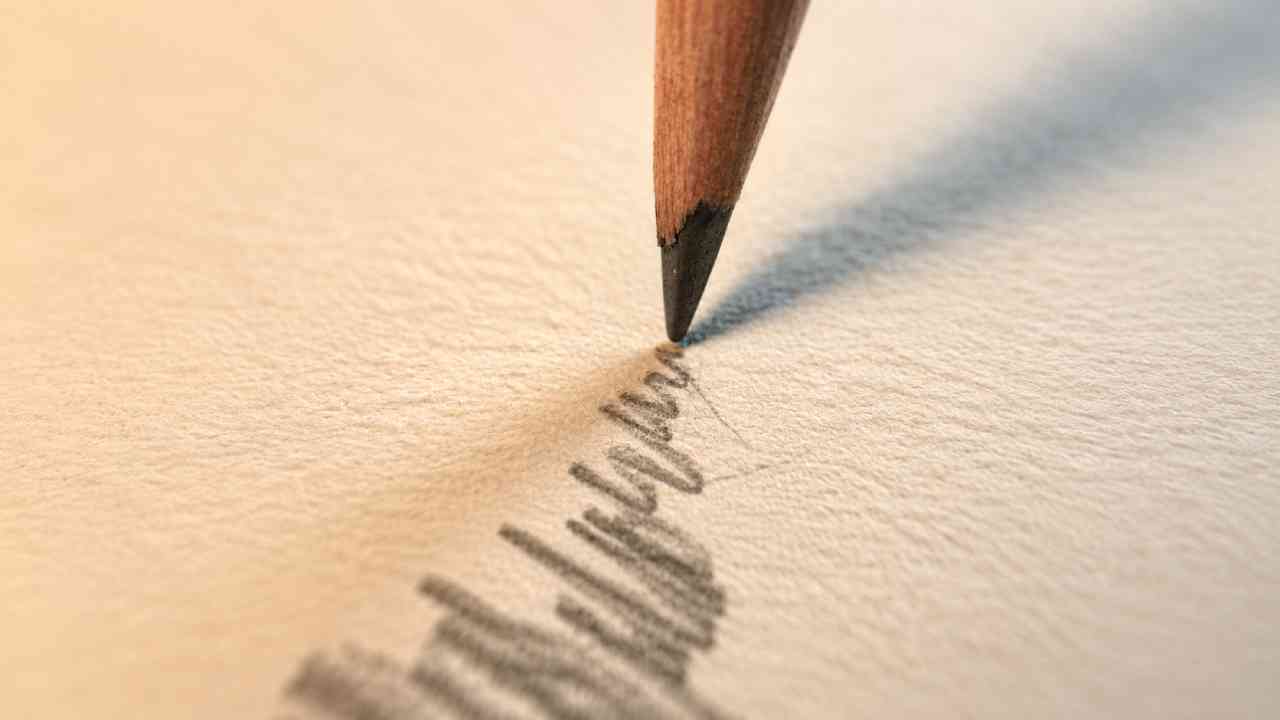
Round Rock Journal – A pencil looks like one of the simplest tools on a desk. We pick it up, press the tip against paper, and words appear. However, this familiar action involves interesting science. The dark center of a pencil contains graphite mixed with other materials, rather than ordinary ink. As the tip moves across paper, friction helps tiny graphite particles break away. These particles settle on and between the paper fibers. As a result, we see a gray or dark line. The process happens so quickly that we rarely think about it. Yet it combines material science, friction, pressure, and the microscopic structure of paper. Even small changes can affect the final mark. For example, a harder tip creates a different line from a softer one. Therefore, understanding how pencils work reveals how an everyday object uses surprisingly clever material properties.
A Pencil Does Not Actually Contain Lead
Many people still call the dark center of a pencil its “lead.” However, modern pencils do not use metallic lead for writing. Their cores are mainly made from graphite mixed with clay or related binders. Graphite is a form of carbon with a layered structure. Those layers are important because they can slide across one another relatively easily. When the tip rubs against paper, tiny pieces of graphite can separate from the core. The clay content also helps control the hardness of the writing material. Therefore, manufacturers can change the mixture to create pencils with different characteristics. Some produce light and precise lines, while others create softer and darker marks. This combination gives pencils their familiar writing behavior. It also explains why the core can feel smooth when moved across paper. So, although the word “lead” remains common in everyday language, graphite is the material doing most of the visible work.
Paper Looks Smooth but Has a Rough Surface
A sheet of paper may feel smooth when you touch it. However, its surface looks very different at a microscopic level. Paper consists largely of cellulose fibers that overlap and connect. These fibers create tiny ridges, gaps, and irregular areas across the surface. That texture plays an important role whenever a pencil touches the page. As the graphite tip moves forward, it rubs against these small surface features. Consequently, the paper helps pull microscopic graphite particles away from the tip. Some particles settle on top of the fibers. Others become caught between them. Together, they create the visible line that we recognize as handwriting or a drawing. Different papers can also produce different results. Rough drawing paper may create a textured line, while smoother paper can produce cleaner marks. Therefore, the paper itself is an active part of the writing process rather than simply a passive surface.
Read Also: Netanyahu Calls for Strong Right-Wing Government After Israel Election Quick Count
Friction Helps Create Every Pencil Mark
Friction is one of the main forces involved when we write. It appears whenever two surfaces move against each other. In this case, those surfaces are the pencil tip and the paper. Without enough friction, the graphite would not transfer effectively. As you move the pencil, the paper resists the motion slightly. This resistance helps loosen tiny graphite particles from the core. They then remain on the paper and form visible marks. Pressure changes the effect as well. Pressing harder generally increases contact between the graphite and paper. Therefore, more material may transfer, creating a darker line. A gentle touch usually produces a lighter mark. However, excessive pressure can leave grooves in the paper or break a sharp tip. This simple relationship between movement, friction, and pressure gives writers and artists considerable control. With only small changes in hand pressure, they can create many different shades and textures.
Graphite Has a Structure Made for Writing
Graphite works well in pencils because of its unusual internal structure. Its carbon atoms form thin layers. Within each layer, the atoms are strongly connected. However, the attraction between neighboring layers is much weaker. Therefore, the layers can slide past each other more easily than many other solid materials. This property helps graphite transfer onto paper during writing. When a pencil moves across the page, small amounts of graphite separate and remain behind. Interestingly, this layered behavior also contributes to graphite’s slippery feel. Graphite has even been used in certain lubrication applications where its properties are useful. For writing, however, manufacturers need more control than pure graphite alone would provide. They combine it with clay and other materials to adjust hardness and performance. As a result, the finished core can produce anything from delicate technical lines to deep artistic shading. The chemistry is simple, but the result is remarkably versatile.
Why Pencil Grades Create Different Marks
Look closely at several pencils and you may notice labels such as H, HB, B, 2B, or 4B. These grades describe differences in writing characteristics. In the common grading system, H pencils are generally harder and create lighter marks. B pencils are softer and usually produce darker marks. Meanwhile, HB sits around the familiar middle range and is widely used for everyday writing. The difference comes largely from how manufacturers formulate the core. Changing the balance of graphite, clay, and other ingredients changes its hardness and behavior. Therefore, an artist may choose several grades for one drawing. A harder pencil can create fine details and pale lines. In contrast, a softer grade can produce rich shadows and broad shading. Writers often prefer a balanced grade because it combines reasonable darkness with durability. These small material changes show how manufacturers can tune a simple tool for very different purposes.
Why Pencil Marks Can Be Erased
One major advantage of writing with a pencil is the ability to erase mistakes. The graphite particles that create a line mainly sit on and around the surface fibers of the paper. They do not behave like liquid ink that penetrates and dries in exactly the same way. When an eraser moves across the mark, friction and the eraser material help lift graphite away from the surface. The eraser also wears down during this process. That is why small crumbs often appear after erasing. Some of those crumbs carry graphite away with them. However, erasing has limits. If you press very hard while writing, the pencil may compress or indent the paper. An eraser can remove much of the visible graphite, but it cannot easily restore flattened fibers or remove a deep groove. Therefore, a heavily written word may leave a faint physical trace even after its dark color disappears.
Why a Pencil Becomes Blunt Over Time
A freshly sharpened pencil has a narrow point that can produce precise lines. However, that point gradually becomes rounder during use. Every stroke transfers a tiny amount of material from the core onto the paper. Although each amount is extremely small, thousands of strokes eventually change the shape of the tip. Friction also wears the core as it moves across the surface. Consequently, the contact area becomes wider and the line may become thicker. Sharpening exposes a new section of the core and restores a finer point. However, sharpening also removes some wood and graphite. This is why a traditional wooden pencil becomes shorter throughout its life. Artists sometimes use this changing tip shape intentionally. A sharp point is useful for details, while a broader tip can help with shading. Therefore, gradual wear is not merely a disadvantage. It can also give the tool different creative possibilities as it changes.
Different Paper Can Change the Writing Experience
Try using the same pencil on printer paper, textured drawing paper, and a smooth notebook page. The writing experience can feel surprisingly different. This happens because each surface has its own texture, density, and finish. Rough paper tends to interact more strongly with the graphite tip. As a result, it can produce grainier marks and visible texture. Smooth paper may allow the pencil to glide more easily and create cleaner lines. However, the exact result also depends on pencil grade and writing pressure. Artists pay close attention to this relationship. They often select paper based on the type of drawing they want to create. Writers may care more about smooth movement and clear letters. Either way, the experiment shows that writing depends on more than the pencil alone. The final mark comes from an interaction between the writing material, the surface, hand pressure, and movement.
Pressure Gives Writers Control Over Light and Dark Lines
One pencil can produce several shades without changing its core. The secret is pressure. When you press lightly, relatively little graphite transfers onto the paper. Therefore, the line appears pale. Increase the pressure and more graphite usually reaches the surface. The resulting mark becomes darker and more noticeable. Artists use this effect constantly when creating shadows, gradients, and texture. They can gradually change pressure to move from light gray into deeper tones. However, pressing harder is not always the best way to achieve a very dark shade. Excessive force can damage the paper and create unwanted grooves. Instead, artists may build several layers or choose a softer pencil grade. This technique provides more control and can protect the paper surface. Even everyday handwriting demonstrates the same principle. Two people using identical pencils may produce noticeably different marks simply because their natural writing pressure differs.
A Simple Pencil Reveals Everyday Science
A pencil may appear ordinary, yet its design brings several scientific ideas together. Graphite provides a material that can transfer onto paper. Clay helps control the core’s hardness. Meanwhile, the paper’s fibrous surface gives graphite particles somewhere to settle. Friction makes the transfer possible, while hand pressure changes the darkness of each line. Even the eraser adds another material interaction by lifting graphite from the surface. What makes this especially interesting is how invisible most of the process feels during daily life. We simply write a note, sketch an idea, or solve a problem without noticing what happens at the microscopic level. Yet every line records a small physical exchange between two materials. That makes the pencil a perfect example of light education. A familiar object can introduce concepts from physics, chemistry, and material science without making learning feel complicated.