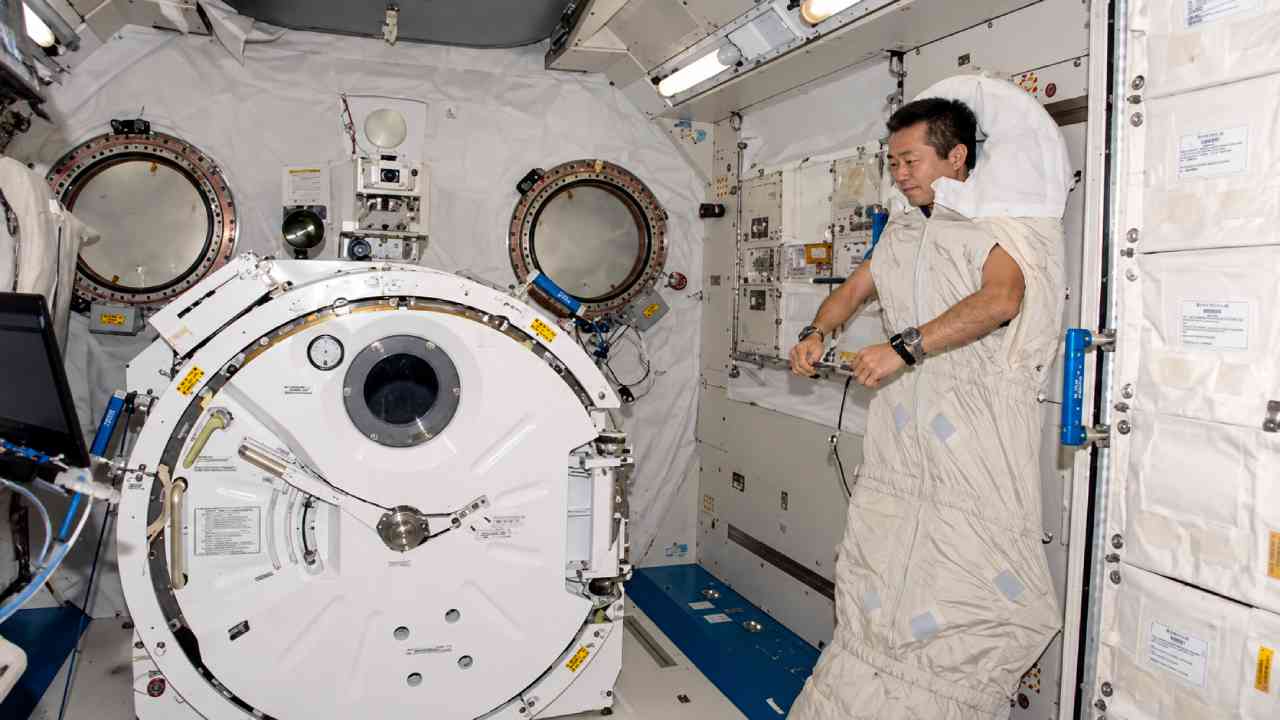
Round Rock Journal – Astronauts sleep in an environment that feels completely different from a bedroom on Earth. In microgravity, their bodies do not press against a mattress. Instead, they can float freely inside the spacecraft. For that reason, astronauts usually rest inside sleeping bags secured to a wall or another surface. This setup keeps them from drifting around while asleep. Interestingly, there is no real need to lie horizontally. An astronaut can sleep in an orientation that appears upright, sideways, or upside down from an Earth-based perspective. However, comfort still matters during a long mission. Crew members need enough rest to remain alert and perform demanding tasks safely. Therefore, their sleeping areas provide personal space while limiting distractions. The experience may seem strange at first. Yet, once astronauts adapt to microgravity, floating while sleeping becomes another normal part of daily life in orbit.
Read Also: From Serie B Dream to Reality, Como Welcome Manchester United
Microgravity Changes the Meaning of Sleeping Positions
On Earth, gravity determines how people interact with their beds. We lie down because gravity constantly pulls our bodies toward the surface below. In orbit, however, astronauts experience continuous free fall, creating the condition commonly called microgravity. As a result, familiar sleeping positions lose much of their meaning. There is no practical requirement to sleep on the back or side. Astronauts can simply secure themselves and relax. Their arms may even float naturally instead of resting beside the body. At first, this sensation can feel unusual because the brain has spent a lifetime interpreting up and down through gravity. Nevertheless, the human body can adapt. After some time, crew members become familiar with moving, working, and resting without the usual sense of weight. This adaptation shows how flexible the human body can be when it enters an environment unlike anything experienced during ordinary life on Earth.
Sleeping Bags Keep Astronauts Safely in Place
A sleeping bag serves a different purpose in space than it does during a camping trip. Its main job is not simply to provide warmth. Instead, it helps astronauts remain in one place throughout their rest period. Without restraint, a sleeping crew member could slowly drift through the cabin. Therefore, sleeping bags are attached inside designated crew areas. This arrangement provides stability while still allowing the body to relax naturally. Astronauts do not need thick mattresses because there is little pressure between their bodies and a sleeping surface. Consequently, the sensation can feel more like floating than lying down. Personal sleeping spaces also give crew members some privacy during missions. That detail becomes important when several people live together inside a confined spacecraft for months. Although the arrangement appears simple, it solves several practical problems at once. It provides security, personal space, and a predictable environment for much-needed rest.
Spacecraft Crew Quarters Become Tiny Bedrooms
Personal space is valuable during long missions. On the International Space Station, crew members have used compact sleeping quarters designed to provide privacy and a place for personal items. These areas are far smaller than typical bedrooms on Earth. Still, they offer an important psychological separation between work and rest. Astronauts spend much of their day performing experiments, maintaining equipment, exercising, and communicating with teams on Earth. Therefore, having a dedicated sleeping area helps establish a daily routine. The quarters may contain a sleeping bag, lighting, ventilation, and space for a few belongings. Good airflow is especially important in microgravity because warm exhaled air does not rise in the familiar way it does on Earth. Proper ventilation helps move air around the sleeping astronaut. Ultimately, these compact spaces demonstrate how spacecraft design must balance limited room with human needs for comfort, privacy, and reliable rest.
Rapid Sunrises Make Space Sleep More Complicated
One surprising challenge comes from the view outside. The International Space Station travels around Earth roughly once every 90 minutes. Therefore, astronauts aboard it can experience about 16 sunrises and 16 sunsets during a 24-hour period. Following each natural light-dark cycle would make a normal sleep schedule almost impossible. Instead, crew members follow carefully planned daily schedules. Lighting inside the station also helps support a more stable routine. This approach matters because the human body relies on circadian rhythms to regulate sleep and wakefulness. On Earth, daylight and darkness provide powerful signals to that internal clock. In orbit, those signals become far less straightforward. As a result, scheduled sleep periods are essential. The repeated sunrise may look spectacular through a window, but astronauts cannot treat every sunset as bedtime. Their daily rhythm must follow mission schedules rather than the rapidly changing scenery outside the spacecraft.
Read Also: How to Build Inner Confidence That Cannot Be Easily Shaken
Quality Sleep Supports Performance and Safety
Sleep is not simply downtime for astronauts. It plays an important role in concentration, memory, mood, and physical performance. These abilities become especially important in an environment where small mistakes can have serious consequences. Astronauts work with scientific equipment, complex spacecraft systems, and detailed procedures. Therefore, fatigue can become a significant operational concern. Mission planners include dedicated sleep periods within crew schedules to support adequate recovery. However, sleeping well in space is not always easy. Noise, workload, environmental conditions, and changes to the body’s internal clock can affect rest. In addition, adapting to microgravity may temporarily change how comfortable sleep feels. For these reasons, researchers continue to study sleep during spaceflight. The findings are valuable not only for current missions but also for future exploration. Longer journeys to destinations such as the Moon or Mars will make reliable sleep strategies even more important for crew health and mission performance.
Astronauts Build Familiar Routines Before Bedtime
Despite the unusual environment, bedtime in space can include surprisingly familiar habits. After completing scheduled work, astronauts may prepare for sleep by handling personal hygiene, communicating with family, or enjoying limited personal time. A consistent routine can help signal that the working day has ended. Meanwhile, lighting and scheduled quiet periods support the transition toward rest. Astronauts must also secure loose objects because everyday items can float away in microgravity. Once everything is ready, they enter their sleeping areas and secure themselves inside their sleeping bags. The process sounds futuristic, yet the goal is very familiar: creating enough comfort to relax and sleep. This similarity makes space life easier to understand. Although technology surrounds the crew, astronauts still depend on basic human routines. In my view, that contrast is one of the most fascinating aspects of spaceflight. Extraordinary surroundings do not remove ordinary human needs; they simply require creative ways to meet them.
Space Sleep Offers Lessons for Future Exploration
Understanding how astronauts sleep will become increasingly important as human spaceflight moves toward longer missions. A short journey in low Earth orbit differs greatly from spending months traveling toward another world. Future crews may face isolation, confined living spaces, demanding schedules, and limited exposure to natural Earth-like daylight. Therefore, spacecraft designers must treat sleep as part of mission architecture rather than an afterthought. Comfortable crew quarters, effective lighting, good ventilation, and predictable schedules can all support better rest. Research from current missions provides useful knowledge for developing these systems. At the same time, sleep studies reveal how humans adapt when familiar environmental signals disappear. The simple act of closing one’s eyes becomes a fascinating example of human adaptability. Astronauts may float inside compact sleeping quarters far above Earth, but their need for restorative sleep remains unchanged. That human constant will follow explorers wherever future missions eventually take them.