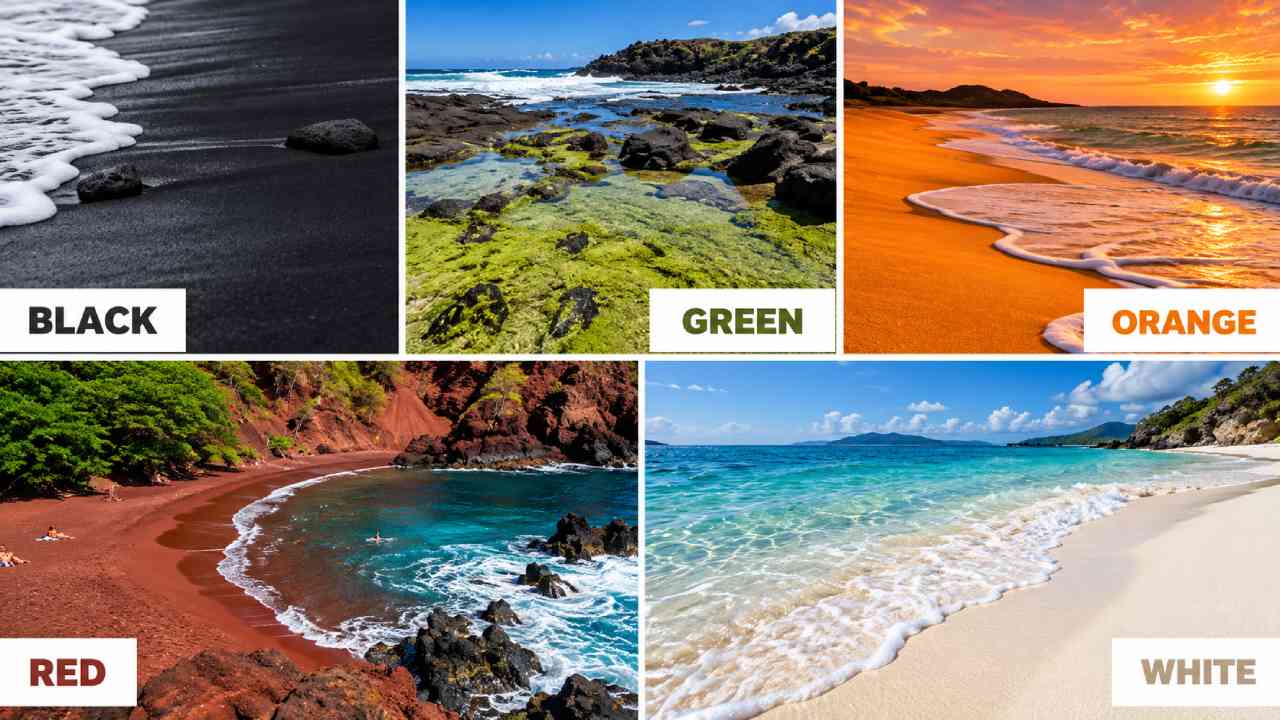
Round Rock Journal – Beach Sand may look simple, yet every grain carries a small piece of geological history. Walk along different coastlines, and the contrast can be surprising. Some beaches shine with bright white sand. Others appear black, golden, pink, or even green. These colors are not random. Instead, they come from the materials that form the sand. Rocks, minerals, coral fragments, shells, and volcanic material can all contribute. Over time, waves and weather break these materials into smaller pieces. Ocean currents then move and sort the grains along the coast. As a result, every beach develops a character shaped by its local environment. Light and moisture can also change how the colors appear. Therefore, understanding colorful sand is like reading a simple record of the landscape around it.
Read Also: Trump Floats “Trump Ocean” for the Atlantic, Says Google CEO Rejected the Idea
Most Sand Begins With a Much Larger Material
A grain of sand often begins as part of something much larger. Rocks exposed to rain, wind, temperature changes, and flowing water slowly break apart. Rivers can then carry tiny fragments toward the coast. Once they reach the sea, waves continue the process. The grains collide with rocks and each other until they become smaller and smoother. However, rocks are not the only source. Tropical beaches can contain fragments of shells, coral, and other calcium-rich biological material. Consequently, two beaches located far apart may have completely different sand compositions. Even neighboring beaches can differ when their geology and wave conditions are not the same. This long process also explains why sand can reveal information about its surroundings. Its color, texture, and mineral content often reflect the materials available nearby.
White Beaches Often Contain Light-Colored Materials
Bright white beaches are strongly associated with tropical destinations. Their pale appearance can come from materials rich in calcium carbonate, including fragments produced from shells and coral-related sources. Waves gradually break these materials into smaller particles. Eventually, they mix with other grains along the shoreline. Quartz can also contribute to pale sand in many locations. Therefore, not every white beach has exactly the same composition. Local geology still matters. Moreover, sunlight makes pale grains reflect more visible light, which can make the shoreline appear especially bright. When clear blue water sits beside the sand, the visual contrast becomes even stronger. This combination explains why white beaches often look remarkably vivid in photographs. Yet, beneath their simple appearance lies a mixture of geological and biological processes that may have taken a very long time.
Black Sand Often Reveals a Volcanic Past
Black Beach Sand creates one of the most dramatic coastal landscapes. In many locations, its dark color has a volcanic origin. Lava and volcanic rocks contain dark minerals. After eruptions, these rocks can cool near the coast and gradually break into smaller fragments. Waves then grind and redistribute the material. As a result, dark grains can accumulate along the shoreline. Islands and coastal regions with active or historic volcanism are particularly well known for black beaches. However, the exact composition varies between locations. Some beaches may contain high concentrations of dark volcanic minerals, while others have a broader mixture. Black sand also absorbs more solar energy than pale sand. Consequently, its surface can become noticeably warm under strong sunlight. Visually, the combination of black grains, white waves, and blue water creates a striking landscape.
Pink Sand Gets Its Color From a Special Mixture
Pink beaches may look digitally edited, yet their unusual color can occur naturally. The shade often comes from a combination of pale sand and reddish or pink biological fragments. In some famous locations, tiny marine organisms called foraminifera contribute reddish material from their shells. Waves break and mix these fragments with lighter sand. As a result, the beach develops a soft pink appearance. However, the intensity is not always constant. Wet sand may appear darker, while strong sunlight can make some areas look brighter. The amount and distribution of colored material also influence the final shade. Therefore, a pink beach may look different throughout the day or across different sections of the coastline. This is a useful reminder that beach color is usually created by a mixture rather than a single ingredient.
Green Sand Comes From an Unusual Mineral
Green beaches are much less common, which makes them especially fascinating. Their color can come from olivine, a naturally green mineral found in certain volcanic rocks. As those rocks weather and erode, olivine crystals can separate from the surrounding material. Waves then transport and sort the grains. Under suitable local conditions, enough green crystals can accumulate to create a noticeably green shoreline. One famous example is Papakōlea Beach in Hawaii. Its unusual appearance is closely linked to volcanic geology and olivine-rich material. However, beaches with such strong green coloration are rare because several conditions must work together. The right minerals must be present, and coastal processes must concentrate them. Therefore, green sand provides a particularly clear example of how geology can influence the appearance of a beach.
Golden and Brown Sand Reflect Different Mineral Mixtures
Many beaches have familiar golden, tan, or brown tones. These colors often result from mixtures of quartz, feldspar, iron-bearing minerals, rock fragments, and other local materials. Iron compounds can add warmer yellow, orange, or reddish tones to individual grains. Meanwhile, darker mineral fragments can deepen the overall shade. Because beaches receive sediment from different sources, their final color depends on the balance of these materials. Rivers may carry particles from inland mountains, while nearby cliffs can provide additional sediment through erosion. Ocean currents then redistribute everything along the coast. Consequently, an ordinary-looking golden beach can contain a surprisingly complex geological mixture. Looking closely at a handful of sand may reveal clear, white, brown, red, and black grains even when the beach appears uniformly golden from a distance.
Water and Sunlight Can Change the Color We See
The composition of Beach Sand is important, but environmental conditions also affect its appearance. Wet sand usually looks darker than dry sand because water changes how light interacts with the grains. Sunlight creates another variable. During bright midday conditions, pale sand may look almost white. Near sunset, however, the same beach can take on warmer golden or orange tones. Cloud cover can also reduce contrast and make colors appear muted. In addition, clear shallow water may add blue or turquoise reflections near the shoreline. Therefore, photographs taken at different times can make one beach look surprisingly different. This does not mean the sand itself has suddenly changed composition. Instead, light, moisture, and surrounding colors alter what our eyes perceive. Understanding this effect helps explain why some famous colorful beaches look more vivid under particular conditions.
Read Also: Why Empty Space in Your Schedule Still Has Value
Waves Constantly Sort and Rearrange Sand Grains
A beach is never completely still. Every incoming wave moves grains, while currents transport sediment along the coastline. Interestingly, grains do not all respond in the same way. Their size, shape, and density influence how easily water can move them. Heavier minerals may become concentrated in certain areas, while lighter material travels farther. Storms can rearrange large sections of a beach in a short period. Later, calmer waves may slowly rebuild the shoreline. Therefore, patches of darker or lighter sand can appear and disappear naturally. This process also means the color of a beach may change slightly over time. New sediment arrives, old material moves away, and waves continuously sort the mixture. What looks like a permanent landscape is actually part of an active coastal system that never completely stops changing.
Every Color Offers Clues About the Landscape
The next time you walk across a beach, looking down can reveal more than expected. White grains may point toward quartz or calcium-rich materials. Black sand can suggest volcanic influences. Pink shades may contain biological fragments, while green grains can reveal unusual minerals such as olivine. However, these clues should not be treated as absolute rules. Beaches are complex environments, and similar colors can sometimes develop from different combinations of material. That complexity makes them more interesting. A small sample of sand can connect geology, biology, erosion, rivers, waves, and weather in one place. In other words, a coastline is constantly collecting and rearranging pieces of its environment. What appears to be an ordinary stretch of sand can therefore serve as a miniature record of the natural processes occurring around it.
Beach Sand Shows How Nature Creates Color Without a Paintbrush
The remarkable variety of Beach Sand shows how many natural processes can shape a coastline. Rocks break apart, minerals separate, shells fragment, and volcanic material erodes. Meanwhile, rivers, waves, and currents transport those particles from one place to another. Sunlight and water then influence how we see the final colors. Together, these processes can produce beaches that appear white, black, pink, green, golden, or somewhere in between. More importantly, each color tells part of a larger environmental story. A beach is not simply a pile of identical grains beside the ocean. It is an active meeting point between land and sea. Once we understand that connection, even a handful of sand becomes more interesting. Its tiny grains can reveal clues about volcanoes, marine life, distant rocks, and landscapes shaped over long periods.