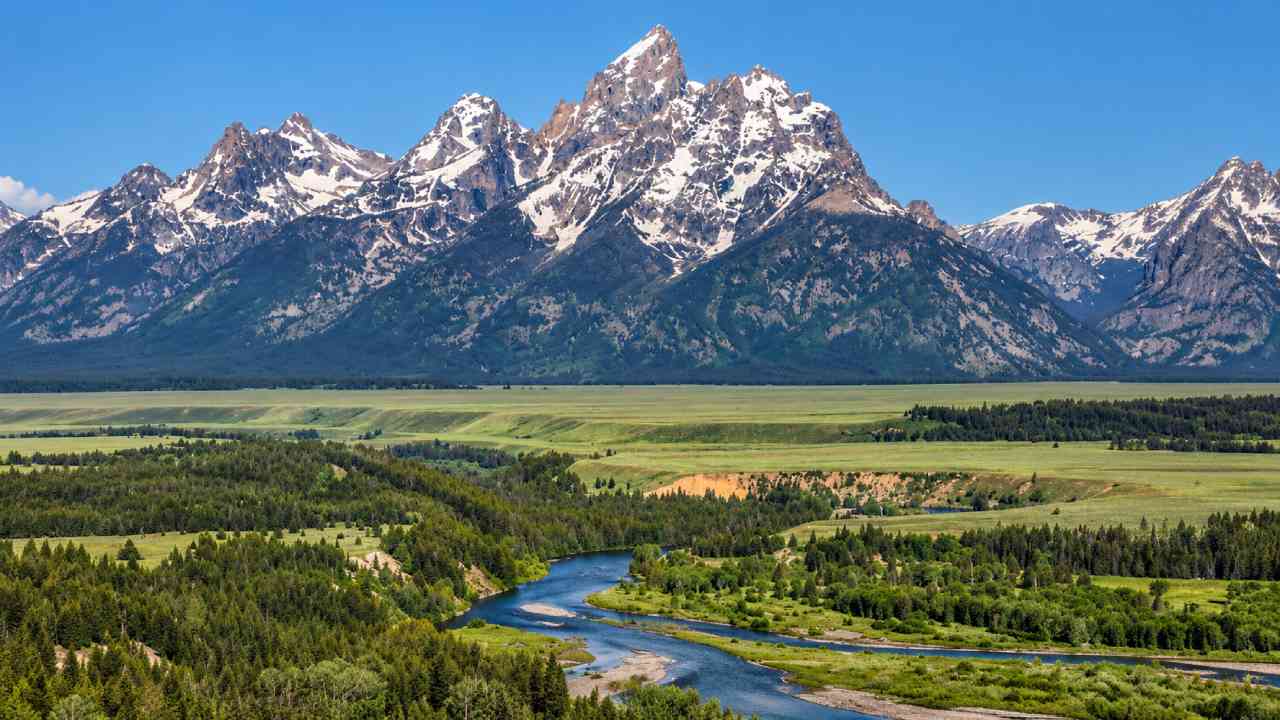
Round Rock Journal – Have you ever traveled from a warm city to the mountains and noticed the sudden change in temperature? The difference can feel surprising. Even under bright sunshine, Mountainous Areas are often much cooler than nearby lowlands. At first, this may seem strange because mountains are slightly closer to the Sun. However, that tiny difference in distance has almost no effect on local temperature. The real explanation lies in the atmosphere. As elevation increases, air pressure decreases. Rising air can then expand and cool. In addition, the lower atmosphere receives much of its warmth indirectly from Earth’s surface. These processes help explain why a journey uphill often brings cooler conditions. Weather, humidity, wind, clouds, and local geography can change the exact temperature. Still, elevation remains one of the main reasons mountain environments are generally cooler. Understanding this process offers a simple look at how Earth’s atmosphere works around us.
Read Also: Houthi Attacks Put Riyadh on Alert as Residents Seek Shelter
Temperature Usually Falls as Elevation Increases
One of the clearest patterns in the lower atmosphere is the relationship between altitude and temperature. Within the troposphere, temperature generally decreases as elevation increases. The average environmental lapse rate is about 6.5 degrees Celsius for every 1,000 meters of altitude. However, this number is an average rather than a fixed rule. Local weather can make the actual change smaller or larger. For example, cloud cover, humidity, wind, and the movement of air masses can affect temperatures at different elevations. Nevertheless, the general pattern explains why a highland town can feel much cooler than a coastal city in the same region. This difference becomes especially noticeable when travelers move quickly between elevations. In Mountainous Areas, people may leave warm conditions below and need a jacket only a few hours later. Therefore, altitude provides an important starting point for understanding why mountain climates can feel so different from those of surrounding lowlands.
Air Pressure Drops Higher Above Sea Level
Air pressure is another important part of the explanation. At sea level, a large amount of atmosphere sits above us. Its weight contributes to relatively high atmospheric pressure. As we climb higher, there is less air above our position. Therefore, atmospheric pressure gradually decreases. This change influences how moving air behaves. When a parcel of air rises into an environment with lower pressure, it can expand. That expansion is important because it affects the air’s temperature. The relationship between pressure, expansion, and temperature is one reason higher elevations often experience cooler conditions. Lower pressure also explains why high-altitude environments can feel different in other ways. For instance, oxygen molecules are more spread out at higher elevations, so each breath contains fewer oxygen molecules than at sea level. However, lower pressure does not automatically mean every mountain location will have identical weather. Regional climate still matters. Even so, declining atmospheric pressure is a fundamental feature of increasing altitude.
Rising Air Expands and Becomes Cooler
The cooling of rising air is known as adiabatic cooling. Although the term sounds technical, the basic idea is straightforward. Imagine a parcel of air moving upward through the atmosphere. As surrounding pressure decreases, that parcel expands. The expansion requires energy, so its internal temperature drops when there is little heat exchanged with its surroundings. This process occurs throughout the atmosphere and strongly influences weather. Dry and moist air do not cool at exactly the same rate because condensation can release latent heat. Therefore, clouds and humidity can change how quickly rising air cools. Still, the basic relationship remains useful for understanding mountain climates. Air forced upward along a mountain slope can expand and cool as it gains elevation. Under suitable conditions, this process can also encourage cloud formation and precipitation. Consequently, Mountainous Areas are shaped not only by their height but also by the continuous movement and transformation of air around their slopes.
Earth’s Surface Plays a Major Role in Heating the Air
A common misconception says mountain peaks should be warmer because they are closer to the Sun. In reality, the difference in distance is tiny compared with the enormous distance between Earth and the Sun. More importantly, the lower atmosphere is strongly influenced by energy absorbed and released by Earth’s surface. Sunlight passes through the atmosphere and reaches land and water. The surface absorbs part of that solar energy and warms. It then transfers energy to the atmosphere through several processes, including radiation, conduction, convection, and evaporation. As a result, air close to the surface often receives substantial heating from below. The atmosphere becomes more complex as altitude increases, but this surface-atmosphere interaction helps explain why being slightly closer to the Sun does not make a mountain peak hotter. Therefore, understanding mountain temperatures requires looking beyond direct sunlight. The way Earth’s surface and atmosphere exchange energy is far more important than the small change in distance from the Sun.
A Simple Example Shows How Large the Difference Can Be
Consider a simplified journey from sea level to a mountain destination 2,000 meters above it. Suppose the temperature near sea level is 30 degrees Celsius. Using the average environmental lapse rate of about 6.5 degrees Celsius per 1,000 meters, a rough calculation suggests a difference of around 13 degrees. That could place the mountain temperature near 17 degrees Celsius. However, this calculation should only serve as an illustration. Real atmospheric conditions rarely follow a perfect formula. A cloudy afternoon, strong wind, dry air, or a passing weather system could produce a different result. Temperature inversions can even reverse the usual pattern for a period. Nevertheless, this example shows why elevation can create noticeable climate differences over relatively short horizontal distances. Travelers in tropical countries may experience hot lowlands and pleasantly cool highlands on the same day. Therefore, Mountainous Areas can develop distinctive local climates even when they are geographically close to warmer regions.
Sunshine Can Still Feel Strong in the Mountains
Cool air does not necessarily mean weak sunlight. In fact, sunlight can feel surprisingly intense at high elevations. As altitude increases, there is less atmosphere above a person to absorb and scatter some incoming solar radiation. Consequently, ultraviolet exposure can increase with elevation. Snow can make this effect even more noticeable because its bright surface reflects a significant amount of ultraviolet radiation. This combination explains why hikers and skiers can experience sunburn despite cold air temperatures. It also highlights an important distinction between air temperature and solar radiation. They are related to different processes and should not be treated as the same thing. A person standing on a mountain may feel cold when a cloud blocks the Sun, then suddenly feel strong warmth when direct sunlight returns. Therefore, sunscreen, protective clothing, sunglasses, and suitable headwear can remain useful at high elevations. Cold weather alone does not provide reliable protection from ultraviolet exposure.
Mountains Can Create Their Own Local Weather Patterns
Elevation is important, but mountains also influence the movement of air. When moist air encounters a mountain range, the terrain can force that air upward. As it rises, it expands and cools. If the air reaches its dew point, water vapor can condense and form clouds. Under suitable conditions, rain or snow may follow. This process can make one side of a mountain wetter than the other. Meanwhile, descending air on the opposite side can become warmer and drier. This contrast can contribute to a rain-shadow effect. As a result, two places separated by the same mountain range may experience very different conditions. Valleys can also develop their own temperature patterns, especially during calm nights when cold, dense air flows downhill and collects at lower points. Therefore, Mountainous Areas are not governed by elevation alone. Slopes, valleys, wind direction, moisture, and sunlight all interact to produce complex local weather that may change within relatively short distances.
Read Also: How Apologizing for Small Things Can Affect the Way You Communicate
Not Every Mountain Region Is Cold All the Time
It would be misleading to assume that every mountain is permanently cold. Latitude, season, elevation, cloud cover, vegetation, wind, and regional climate all influence temperature. A moderately elevated mountain in the tropics can still become warm during a sunny afternoon. In contrast, a high mountain at a greater latitude may remain extremely cold for long periods. The direction of a slope can also matter because some slopes receive more direct sunlight than others. Likewise, weather systems can temporarily bring unusually warm or cold air into a region. Temperature inversions provide another interesting exception. During an inversion, colder air may become trapped in a valley while warmer air sits above it. Therefore, a higher location can occasionally be warmer than the land below. These exceptions do not contradict the general relationship between altitude and temperature. Instead, they show that Earth’s atmosphere is dynamic. Elevation sets an important background pattern, while local and regional factors determine what people actually experience.
Plants, Animals, and People Adapt to Cooler Elevations
Temperature differences across elevation can shape entire ecosystems. As a mountain rises, changes in temperature, moisture, wind, and soil conditions can influence which plants survive. Lower slopes may support forests or agricultural crops, while higher elevations can favor grasses, shrubs, or plants adapted to colder conditions. Animals also respond to these environmental changes. Some species live within narrow elevation ranges, while others move between elevations as seasons change. Humans have adapted as well. Communities in highland regions often design homes, clothing, agriculture, and daily routines around cooler temperatures. Farmers may grow crops that perform better in mild conditions than in hot lowlands. Tourism can also develop around the refreshing climate of highland destinations. However, local conditions vary greatly from one region to another. For that reason, elevation should be considered alongside rainfall, soil, sunlight, and seasonal patterns. Mountainous Areas demonstrate how atmospheric processes can influence both natural ecosystems and human life.
Mountain Air Reveals How Dynamic the Atmosphere Really Is
The cool feeling of mountain air is the result of several connected processes rather than one simple cause. As elevation increases, atmospheric pressure generally decreases. Rising air can then expand and cool through adiabatic processes. At the same time, Earth’s surface plays a major role in heating the lower atmosphere. Together, these factors help create the familiar temperature difference between mountains and nearby lowlands. However, the atmosphere never follows a single rule perfectly. Humidity, wind, clouds, seasons, latitude, and terrain can all modify local conditions. That complexity is what makes mountain weather so fascinating. A warm valley, a misty hillside, and a cold summit can exist within the same region. For students and curious travelers, Mountainous Areas provide an easy real-world example of atmospheric science in action. The next time the air suddenly feels cooler during an uphill journey, the change will be more than a sensation. It will be a visible lesson in how Earth’s atmosphere responds to elevation.