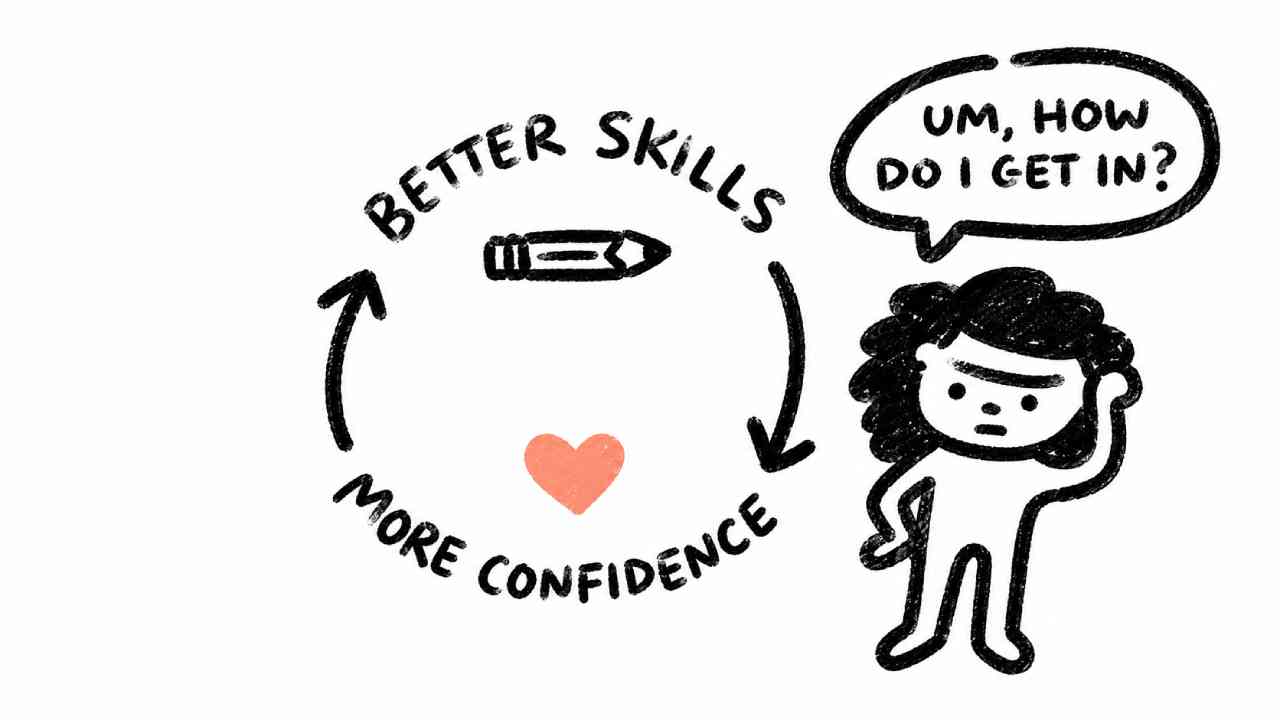
Round Rock Journal – Many people assume creativity belongs only to painters, designers, musicians, or writers. However, Creative Confidence reaches far beyond artistic ability. It describes the willingness to explore ideas and trust your ability to create something useful. You may use it when solving a problem at work. You may also need it when planning a project or finding a better daily routine. Therefore, being unable to draw does not mean you lack creativity. Artistic skill is only one way to express creative thinking. In everyday life, creativity often appears through small decisions and fresh approaches. Someone may simplify a complicated process or discover a better way to organize information. Another person may combine familiar ideas in an unexpected way. These actions require curiosity rather than artistic talent. Once creativity is viewed this way, it becomes more accessible. Instead of asking whether you are naturally creative, a better question appears: are you willing to explore?
The Fear of Being Bad Can Stop Creativity Early
Creative ideas often disappear before they receive a fair chance. One common reason is fear of producing something disappointing. A person may imagine an interesting project, yet immediately question whether it will work. As a result, the idea gets rejected before any experiment begins. This habit can slowly weaken Creative Confidence. The problem becomes stronger when people compare their first attempts with polished work from experienced creators. However, that comparison ignores the practice behind the finished result. Beginners naturally make mistakes because they are still collecting information. Therefore, an imperfect attempt should not automatically be treated as failure. It can reveal what needs improvement. This shift matters in self development because confidence rarely appears before action. In many cases, confidence grows after repeated attempts. Starting before you feel fully prepared may feel uncomfortable. Nevertheless, it creates experience, and experience provides stronger evidence than endless self-doubt.
Small Creative Experiments Make Starting Less Intimidating
Large projects can make creativity feel difficult. Small experiments, however, lower the pressure. Imagine someone who wants to become more creative but has never considered themselves artistic. Instead of beginning with a complicated painting, they could decorate a simple notebook. Another week, they might arrange flowers, photograph ordinary objects, or try a new cooking idea. The final result is not the main goal. Instead, the person practices making choices without knowing exactly how everything will turn out. This process gradually strengthens Creative Confidence. Moreover, small projects provide quick feedback. A color combination may work better than expected. A photograph may reveal an interesting composition. Even an unsuccessful attempt provides useful information for the next experiment. Therefore, progress becomes easier to notice. Creative development does not require dramatic breakthroughs every week. Consistent exposure to small challenges can build familiarity with uncertainty, which makes larger creative decisions feel less intimidating over time.
Read Also: OKX Offers Account Protection Worth Up to Rp8.19 Billion Against Hacks
Practice Teaches the Brain to Explore More Possibilities
Practice is often associated with mastering a specific skill. Yet, creative practice can serve another purpose. It teaches us to generate alternatives instead of stopping at the first answer. For example, consider a simple challenge: find five different uses for an empty cardboard box. The first ideas may feel obvious. However, continuing beyond them forces the mind to explore less familiar possibilities. Similar exercises can appear in daily life. A person might develop three solutions to a work problem before choosing one. Alternatively, they might rewrite an idea from several perspectives. This habit supports Creative Confidence because it reduces dependence on finding one perfect answer immediately. Furthermore, exploration becomes easier with repetition. The brain starts treating uncertainty as a normal part of problem-solving. Consequently, creative thinking becomes less mysterious. It becomes a process that can be practiced. Talent may influence how quickly someone develops certain abilities, but regular exploration still creates meaningful opportunities for improvement.
Imperfect Work Can Become Valuable Feedback
Perfectionism can appear productive because it encourages high standards. However, it can also prevent people from finishing or sharing their ideas. Creative Confidence develops differently. It allows someone to produce an imperfect version, examine it, and make improvements. Consider a person writing their first presentation. The opening may feel weak, while several slides may contain too much information. Instead of abandoning the project, they can treat those problems as feedback. The next version becomes clearer because the first version existed. This principle applies to many creative activities. A failed recipe teaches something about ingredients. An awkward photograph reveals something about composition. Likewise, an unsuccessful business idea may expose an assumption that needs testing. Therefore, mistakes can function as information. This does not mean every mistake should be celebrated. Instead, it means mistakes should be examined. When people learn to separate their personal worth from the quality of one attempt, experimentation becomes much easier.
Constraints Can Make Creative Thinking Easier
Complete freedom sounds ideal, but it can make creative decisions surprisingly difficult. When every option is available, choosing where to begin may become overwhelming. Constraints can solve this problem. For instance, imagine being asked to design anything you want. The possibilities are almost endless. Now imagine being asked to create something using only paper, three colors, and thirty minutes. Suddenly, the challenge has clear boundaries. Those limits provide direction. The same principle can support Creative Confidence outside artistic projects. A team may search for a solution that fits a fixed budget. A writer may explain an idea using only 200 words. Someone planning their morning may choose only three essential tasks. In each case, restrictions encourage prioritization and experimentation. Therefore, limitations do not always reduce creativity. Sometimes, they provide the structure creativity needs. Learning to work within boundaries can also reduce the pressure to find a perfect solution among endless possibilities.
Curiosity Is Often More Useful Than Waiting for Inspiration
People sometimes imagine creativity as a sudden moment of inspiration. In reality, curiosity can be much more dependable. A curious person asks questions even when the answers are unclear. What happens if these two ideas are combined? Why does this process work this way? Could there be a simpler approach? These questions encourage exploration. As a result, Creative Confidence grows through active discovery rather than passive waiting. Curiosity also reduces the pressure to immediately know the correct answer. Instead of saying, “I should already know how to do this,” someone can ask, “What could I learn by trying?” That small change creates room for experimentation. Moreover, curiosity makes unfamiliar subjects less threatening. A new skill becomes something to investigate rather than another test of personal ability. Over time, this mindset can influence work, learning, communication, and problem-solving. Inspiration remains valuable, but curiosity gives people something practical to do while inspiration has not arrived yet.
Creative Confidence Can Improve Everyday Problem-Solving
Creativity becomes especially valuable when the usual solution stops working. A missed deadline may require a different workflow. A limited budget may demand a simpler approach. Likewise, an unexpected problem at home may require improvisation. These situations have little to do with traditional art. Nevertheless, they require flexible thinking. Creative Confidence helps people consider alternatives without immediately dismissing unfamiliar options. First, they can define the problem clearly. Next, they can generate several possible responses. Then, they can test the most realistic option and adjust it when necessary. This approach turns creativity into a practical skill. It also prevents one failed solution from feeling like the end of the process. Instead, failure becomes a signal to explore another route. Of course, creativity does not guarantee that every idea will succeed. Good judgment still matters. However, having the confidence to generate and test alternatives can make everyday challenges easier to approach.
Comparing Yourself With Experts Can Distort Your Progress
Online platforms make excellent creative work visible every day. This access can provide inspiration, but it can also distort expectations. Beginners often see the final product without seeing the failed attempts behind it. Consequently, they may compare their early experiments with someone else’s years of practice. Creative Confidence can suffer under that comparison. A healthier approach is to compare current work with previous work. Has your thinking become clearer? Are you trying ideas that once felt intimidating? Can you recover faster when an experiment fails? These questions reveal progress that external comparison may hide. Moreover, expertise develops differently across people and fields. Someone may learn visual design quickly but need more time to become comfortable with writing. Another person may excel at generating ideas but struggle with execution. Therefore, personal development should not depend on matching another person’s timeline. Progress becomes more sustainable when improvement, rather than superiority, becomes the main measure.
Building Creative Confidence Requires Action Before Certainty
Waiting until you feel confident can create a frustrating cycle. Without action, there is little new experience. Without experience, confidence has little evidence to grow from. Therefore, Creative Confidence often requires action before certainty. The first attempt may feel awkward. The second may still contain obvious mistakes. Yet, each attempt provides information that thinking alone cannot produce. This does not mean taking reckless risks. Instead, choose experiments where mistakes remain manageable. Try a new way to organize a project. Write a short piece before attempting a long one. Learn a basic craft without expecting professional results. Share an early idea with someone you trust. These actions create small experiences of uncertainty followed by learning. Gradually, unfamiliar situations become less threatening. Confidence then develops from evidence: you have tried before, adjusted before, and learned before. That evidence is often more powerful than simply telling yourself to feel confident.
Creativity Becomes Stronger When It Becomes Part of Daily Life
Creative growth does not require turning every day into an ambitious project. In fact, small moments may be more sustainable. Ask one additional question during a meeting. Try a different route when solving a familiar problem. Write down an unusual idea before judging it. Experiment with a new hobby during the weekend. These actions keep Creative Confidence connected to ordinary life. More importantly, they remove the idea that creativity belongs only to exceptionally talented people. Creativity becomes a behavior rather than an identity reserved for artists. Over time, this perspective can change how someone approaches uncertainty. A difficult problem becomes an invitation to explore alternatives. A mistake becomes information for another attempt. A new skill becomes something that can be learned gradually. Artistic talent may create beautiful results in certain fields. However, creative confidence serves a broader purpose. It gives people permission to explore, experiment, learn, and create before they know exactly where the process will lead.