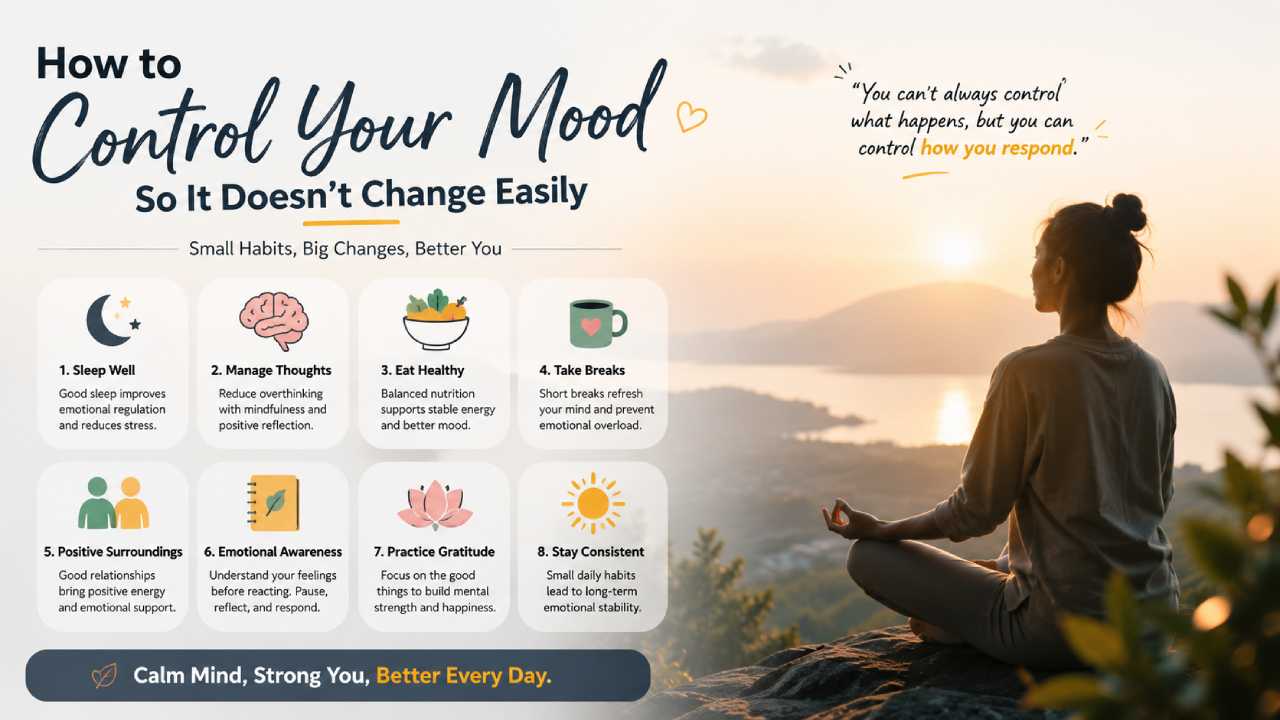
Round Rock Journal – How to Control Your Mood has become an important topic in modern life because many people now face emotional pressure almost every day. Fast digital lifestyles, endless notifications, work stress, and social expectations often make emotions feel unstable. As a result, some people feel motivated in the morning but emotionally exhausted only a few hours later. Although mood swings are normal, uncontrolled emotional changes can slowly affect productivity, relationships, and mental health. Therefore, learning how to maintain emotional balance is no longer just a self-development trend. Instead, it has become a practical life skill that helps people stay calm and focused in difficult situations. Interestingly, many psychologists believe emotional stability often comes from small daily habits rather than dramatic life changes.
Read Also: Rosé BLACKPINK Captivates Met Gala 2026 With a Dramatic Giant Bird Brooch
Understanding Why Mood Changes So Quickly
Before controlling emotions, people first need to understand why moods change easily. In many situations, emotional instability does not only come from mental pressure. Physical conditions also play an important role. For example, lack of sleep, dehydration, unhealthy food, and excessive screen time often influence emotional reactions without being noticed. Furthermore, social media can quietly increase anxiety because people constantly compare their lives with others. Consequently, emotions become more sensitive and difficult to manage. Many emotional experts explain that modern lifestyles overstimulate the brain almost every hour. Because of this, emotional fatigue becomes increasingly common among young adults and professionals. By recognizing these triggers early, people can respond more calmly instead of reacting emotionally in every situation.
Building Healthy Sleep Habits Improves Emotional Stability
Sleep quality has a powerful connection with emotional health. However, many people still underestimate its importance. When the brain does not receive enough rest, emotional control becomes weaker. As a result, people become more irritable, anxious, and emotionally reactive during daily activities. In contrast, consistent sleep patterns often help the body recover both physically and mentally. Several studies even show that sleeping seven to eight hours regularly improves mood regulation significantly. Additionally, reducing phone usage before bedtime can help the brain relax more naturally. Soft lighting, comfortable room temperature, and quiet environments also support better sleep quality. Therefore, improving sleep habits may become one of the simplest yet most effective ways to maintain emotional balance in modern life.
Learning to Reduce Overthinking Gradually
Overthinking often becomes one of the biggest reasons why moods change rapidly. Many people repeatedly think about situations that have not even happened yet. Unfortunately, the brain reacts to imagined problems almost the same way it reacts to real danger. Consequently, stress hormones increase, and emotional stability slowly decreases. To overcome this problem, many self-development experts recommend simple mindfulness techniques. For instance, writing thoughts in a journal can help organize emotions more clearly. Meanwhile, deep breathing exercises may calm the nervous system during stressful moments. In addition, limiting negative information consumption can also protect mental energy. Although overthinking cannot disappear instantly, small daily improvements usually create meaningful long-term emotional stability.
Healthy Food Choices Can Affect Mood Significantly
Food does not only influence physical energy. Surprisingly, it also affects emotional conditions throughout the day. Many people notice they become tired, irritated, or emotionally sensitive after consuming too much sugar or processed food. On the other hand, balanced nutrition often supports more stable energy and clearer thinking. Fruits, vegetables, healthy protein, and enough water can help the brain function more effectively. Furthermore, maintaining stable blood sugar levels usually reduces sudden emotional fluctuations. Nutrition specialists also explain that gut health has a strong connection with emotional well-being. Therefore, healthier eating habits may indirectly improve emotional control. Even though food alone cannot solve emotional problems, it still contributes significantly to overall mental balance.
Taking Short Breaks Helps the Mind Recover
Modern culture often encourages people to stay productive constantly. Nevertheless, continuous activity without rest can slowly damage emotional stability. When the brain becomes mentally exhausted, even small problems may feel overwhelming. Because of this, taking short breaks throughout the day becomes extremely important. Simple activities such as walking outside, stretching, listening to music, or enjoying silence can refresh emotional energy naturally. Moreover, short pauses allow the nervous system to recover from digital overstimulation. Many productivity experts now recommend balanced work routines instead of nonstop multitasking. Interestingly, people who regularly rest often become more productive and emotionally stable than those who force themselves to work endlessly. Therefore, rest should be viewed as a healthy recovery process rather than laziness.
Read Also: Why the Sky Changes Color When the Sun Sets
Social Environments Influence Emotional Conditions
People often underestimate how much social environments affect emotional stability. Negative surroundings filled with criticism, gossip, or constant pressure can slowly influence mental health. Consequently, emotions become more fragile and difficult to control. In contrast, supportive relationships usually create feelings of safety and emotional comfort. Spending time with calm and positive individuals often helps reduce stress naturally. Additionally, healthy communication can prevent misunderstandings that trigger emotional reactions. Some psychologists even explain that emotional energy can spread between people unconsciously. Therefore, choosing healthy social circles becomes an important part of emotional self-care. Although avoiding negativity completely is impossible, limiting toxic interactions may significantly improve long-term emotional stability.
Practicing Emotional Awareness Creates Better Self-Control
Many people struggle to control emotions because they react automatically without understanding what they truly feel. Emotional awareness helps individuals recognize feelings before those emotions become overwhelming. For example, someone who notices early signs of frustration can pause before reacting aggressively. As a result, emotional decisions become more thoughtful and controlled. Self-awareness also allows people to identify patterns that repeatedly trigger emotional stress. Furthermore, understanding personal emotional habits often improves communication and relationships. Many therapists recommend practicing emotional reflection regularly because it strengthens mental resilience gradually. Although emotional awareness requires practice, it eventually helps people respond calmly instead of impulsively during difficult situations.
How to Control Your Mood Requires Consistent Daily Habits
How to Control Your Mood is not about becoming emotionally perfect every single day. Instead, emotional control develops slowly through small and consistent habits. Sleeping better, reducing overthinking, eating healthier food, resting regularly, and maintaining supportive relationships all contribute to emotional stability over time. Moreover, emotional balance does not mean avoiding sadness or stress completely. Rather, it means learning how to respond calmly when challenges appear. In today’s fast-moving world, emotional stability has become one of the most valuable personal skills people can develop. Therefore, investing time in mental well-being is just as important as improving physical health or career success. Ultimately, people who understand their emotions often feel more peaceful, focused, and prepared to handle modern life pressures.