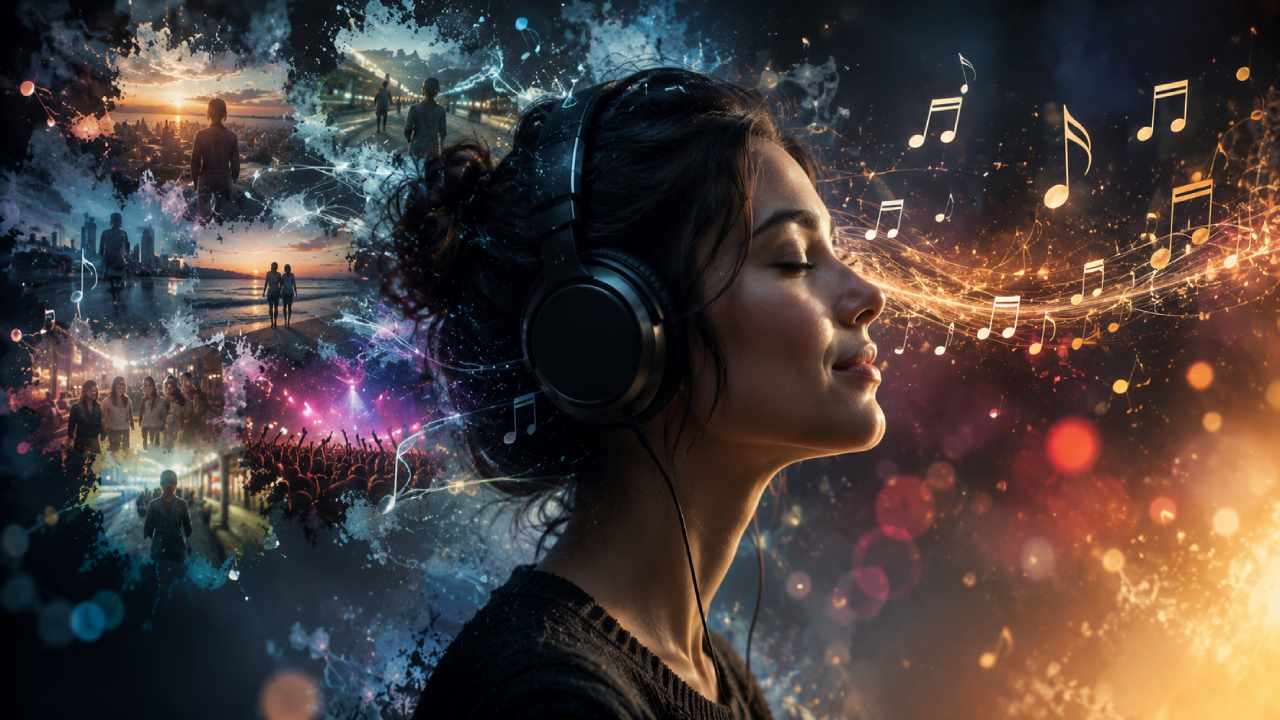
Round Rock Journal – Why Certain Songs often become a fascinating topic because almost everyone has experienced it at least once. Imagine walking through a supermarket, sitting in traffic, or scrolling through social media when an old song suddenly starts playing. Within seconds, something unexpected happens. Your mind quietly travels back in time. Suddenly, forgotten moments begin to reappear. You may remember an old classroom, a childhood vacation, a first crush, or even a small moment that seemed unimportant years ago. Interestingly, music does not simply entertain people. Instead, it creates invisible connections between emotions and memories. Therefore, a song can feel much more powerful than words or pictures. Scientists and psychologists have also explored this phenomenon because the relationship between music and memory appears stronger than many people once believed.
Read Also: Bella Hadid’s Jane Birkin Tribute at Cannes Becomes Fashion’s Most Talked-About Moment
Music Does More Than Reach the Ears
Many people think music only affects hearing. However, the human brain processes music in a much deeper way. When a song enters the brain, several areas begin working at the same time. Some parts analyze sound patterns, while others process emotions and memories. As a result, music creates a richer experience compared to ordinary sounds. For example, hearing random street noise rarely triggers powerful emotions. In contrast, a familiar song can instantly create a reaction. That reaction may include happiness, sadness, excitement, or comfort. Therefore, music becomes more than background noise. It slowly turns into part of personal experiences and emotional history.
Emotions Help Memories Stay Stronger
Human memories often become stronger when emotions are involved. This explains why people easily remember emotional events from years ago. For instance, birthdays, school graduations, family trips, or first relationships usually remain clear in memory. During these moments, certain songs may also be playing repeatedly in the background. Consequently, the brain links the music with emotions felt at that time. Years later, hearing the same song can reopen those emotional connections. Interestingly, many people think they remember the song first. However, emotions often return before the actual memory appears. The brain then follows those emotions and starts rebuilding the forgotten moment piece by piece.
Teen Years Usually Create Strong Music Memories
Researchers and psychologists often notice an interesting pattern involving music and age. Songs heard during teenage years and early adulthood tend to stay memorable for a very long time. During this stage of life, people experience many important changes and first experiences. Friendships become deeper, personal identity develops, and emotional experiences become stronger. Therefore, the brain stores these memories with greater importance. In addition, music often becomes part of daily life during those years. People listen to songs while studying, traveling, or spending time with friends. As a result, these songs eventually become emotional markers connected to important life moments.
The Brain Quietly Builds Memory Connections
The brain works in fascinating ways without people noticing it. Every experience creates small connections inside memory systems. Music strengthens these connections because it combines rhythm, lyrics, emotion, and timing all together. Think about memories like books inside a library. Every song acts like a bookmark placed inside certain chapters of life. Later, hearing that song again helps the brain reopen the same pages. Consequently, forgotten experiences suddenly return with surprising detail. This process often happens within seconds, which explains why people sometimes feel shocked by the memories that suddenly appear.
Nostalgia Feels Different for Every Person
Although songs can trigger nostalgia, not everyone experiences it in the same way. One person may hear a song and remember a happy summer vacation. Meanwhile, another person may connect the same song with heartbreak or difficult times. Therefore, music experiences become deeply personal. Two people can listen to identical songs while experiencing completely different emotions. This difference explains why certain songs become meaningful for some individuals but feel ordinary for others. Personal experiences quietly shape the emotional value attached to music throughout life.
Read Also: The Reason Why Many People Smile But Feel Tired Inside
Modern Technology Is Changing Musical Experiences
Today, technology plays a huge role in how people discover and revisit music. Streaming platforms constantly suggest songs based on listening habits. Because of this, old songs can suddenly return to daily life without warning. A forgotten song may appear inside a playlist and instantly trigger memories that seemed completely lost. Furthermore, social media trends often revive songs from previous decades. As a result, people experience nostalgia more frequently than before. In some ways, technology has become a modern bridge connecting people with emotional moments from the past.
Music Often Acts Like a Small Time Machine
Many people describe songs as emotional time machines. While that comparison may sound dramatic, it actually feels surprisingly accurate. A three-minute song can transport someone back to a specific moment from years earlier. In addition, memories connected to music often feel more vivid than ordinary memories. Faces become clearer, emotions become stronger, and forgotten details suddenly return. Consequently, songs create experiences that feel almost magical. Science explains the process, yet the feeling itself still surprises many people.
Forgotten Moments Rarely Disappear Forever
Why Certain Songs continue fascinating people because they reveal something interesting about human memory. Memories do not always disappear completely. Instead, many experiences simply become hidden beneath newer information. Music often acts like a key that unlocks those hidden spaces. Therefore, a forgotten memory may quietly return after years of silence. That small moment reminds people that the brain stores much more than they realize. Perhaps this is why old songs sometimes feel emotional in unexpected ways. They are not simply melodies. Instead, they become personal stories waiting to be heard again.