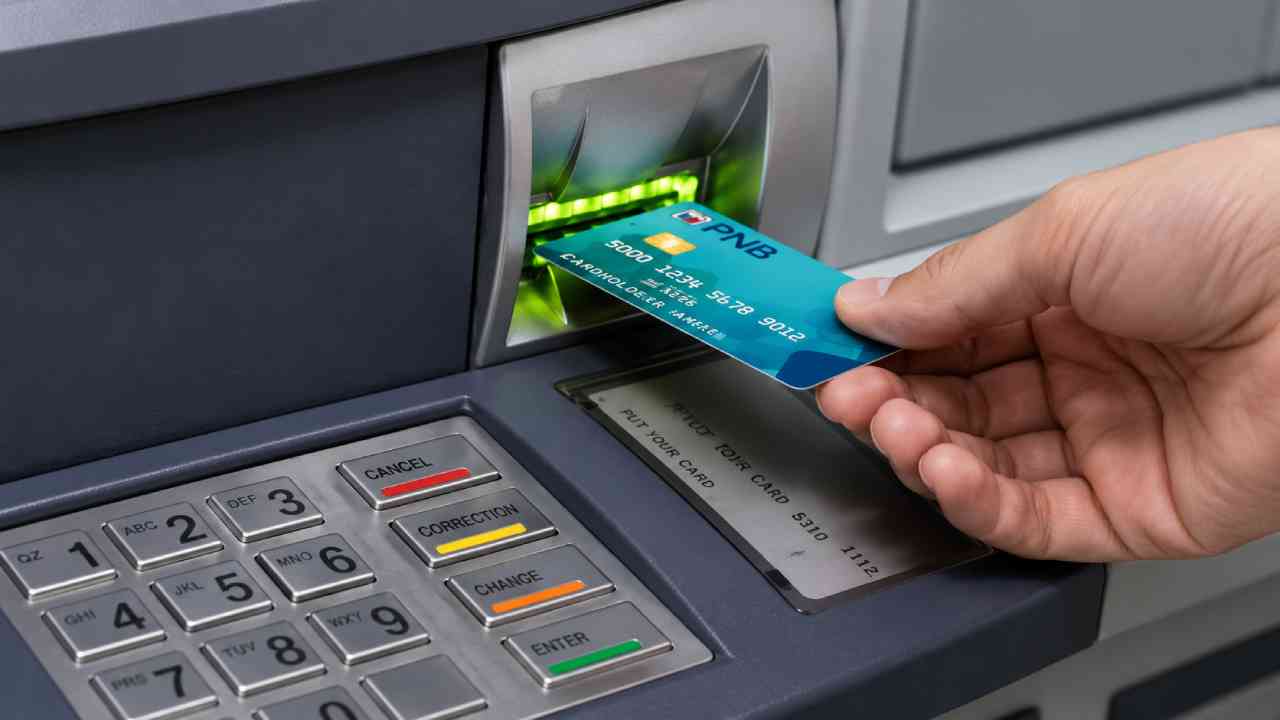
Round Rock Journal – Have you ever wondered how an ATM Recognize Your PIN within seconds, even when you use a machine far from your bank? The ATM does not keep a giant list of customer PINs inside the machine. Instead, it works as a secure terminal that communicates with banking systems. When you insert your card, the ATM reads information that identifies the card and its issuer. Then, after you enter your PIN, secure technology protects that information before it travels through the payment network. Your bank’s systems perform the important verification process. They determine whether the entered PIN matches the credentials linked to your card. Therefore, the ATM itself does not need to “remember” your secret number. It only needs to securely handle your request and receive an approval or rejection. This design allows millions of customers to use different ATMs while keeping sensitive banking information away from individual machines.
Read Also: iPhone 18 Pro and iPhone Ultra May Skip September 8 Launch
The ATM Does Not Keep Everyone’s PIN
A common misconception suggests that every ATM contains a database filled with customer PINs. In reality, that approach would create an enormous security problem. Banks design ATM networks so individual machines do not need a readable collection of secret PINs. Instead, the ATM gathers the information required for a transaction and communicates with secure financial systems. Think of the machine as a messenger rather than a vault containing everyone’s secrets. It accepts your card, receives your input, and sends a protected request through the network. Consequently, an ATM operated by another bank can often process your card as well. The participating financial networks help route the request toward the correct institution. This separation also limits what one ATM needs to know. From a security perspective, that makes sense. A machine sitting in a public location should handle as little sensitive information as possible while still providing fast access to banking services.
What Happens After You Insert Your Card?
The process begins before you type a single number. Your card contains information that helps the ATM identify the card and determine where the transaction should go. However, this information does not simply reveal your PIN. After reading the necessary card data, the ATM asks you to enter your secret number. The machine then uses secure PIN-handling technology to protect the input. Meanwhile, the transaction request includes other details, such as the operation you want to perform. The network uses relevant card information to route that request toward the appropriate systems. This happens quickly, which makes the process appear almost instant from the user’s perspective. Yet several technical steps can occur behind the screen. Importantly, the system separates card identification from PIN verification. Knowing which account or institution a card relates to does not automatically reveal the secret number that protects it.
Your PIN Does Not Travel Like an Ordinary Message
Typing a PIN may feel similar to entering four or six digits into a calculator. However, financial systems treat those digits as highly sensitive information. ATM security mechanisms protect PIN data before it moves through the transaction infrastructure. In other words, the system does not handle your PIN like an ordinary text message. Secure cryptographic processes transform and protect sensitive information during verification. As a result, systems can perform the necessary checks without casually exposing the original digits throughout the network. This distinction matters because ATMs operate in public environments and connect with larger financial systems. A well-designed payment network assumes that sensitive information requires special protection at every important stage. Therefore, the clever part is not that an ATM Recognize Your PIN from memory. The clever part is how several systems cooperate to verify your credentials while reducing unnecessary exposure of the secret itself.
The Bank Handles the Important Verification
Once the protected request enters the banking network, the relevant financial systems take over. The ATM does not need to decide everything locally. Instead, the card issuer or another authorized system can validate the PIN using secure cryptographic methods. Banks commonly rely on specialized security infrastructure for sensitive operations. One important component is a Hardware Security Module, often called an HSM. These devices perform protected cryptographic operations and help institutions manage sensitive keys securely. The verification process determines whether the entered PIN corresponds correctly to the card credentials. The system can then return a simple result, such as approval or rejection. Consequently, the ATM does not need to receive your actual stored PIN as an answer. It mainly needs to know whether verification succeeded. This architecture helps explain why banking networks can handle huge numbers of transactions without placing readable PIN lists inside every ATM.
Why Can Your Card Work at Another Bank’s ATM?
Imagine traveling and finding an ATM that belongs to a different bank. You insert your usual card, enter the same PIN, and the machine may still recognize the transaction correctly. How? Financial networks connect participating banks and payment systems. Card information helps the network determine where the authorization request needs to travel. The ATM operator does not need access to a universal list of customer PINs. Instead, the network routes the protected transaction toward systems that can process it. Those systems verify the required credentials and send a response back through the network. Therefore, the same PIN can work across many compatible ATMs without every machine knowing it beforehand. This arrangement resembles asking the correct authority to confirm an identity rather than giving every checkpoint a complete database of secrets. It provides convenience while keeping the most sensitive verification processes within controlled financial infrastructure.
Why Does the ATM Reject a Wrong PIN?
The process becomes easier to understand when you deliberately imagine entering the wrong number. The ATM protects the entered digits and sends the relevant verification request through its network. The authorized banking system performs the check and determines that the credentials do not match. It then returns a rejection response. The ATM can display a message telling you that the PIN was incorrect without learning what the correct PIN should have been. This distinction is important. A system does not always need to reveal a secret to determine whether an attempt is valid. Moreover, banks usually limit repeated incorrect attempts because unlimited guesses would weaken PIN security. Exact policies vary among institutions and card networks. For users, the safest approach remains simple: choose a PIN that others cannot easily guess, keep it private, and never share it with someone claiming they need it to verify your account.
Read Also: Stop Seeking Validation From Everyone Around You
Why PIN Length Alone Is Not the Whole Security Story
A four-digit PIN may seem surprisingly short. After all, four decimal digits provide only 10,000 possible combinations. However, ATM security does not rely on PIN complexity alone. Banks combine the PIN with card credentials, cryptographic controls, transaction monitoring, and limits on repeated attempts. These layers make the real system very different from an unrestricted guessing game. For example, an attacker normally cannot stand at an ATM and try thousands of combinations without triggering security controls. Banks may also monitor unusual transaction patterns and apply additional safeguards behind the scenes. Therefore, PIN security works as part of a larger system rather than as an isolated password. Users still play an important role. Avoid obvious choices, protect the keypad while entering the number, and never write the PIN directly on the card. Those simple habits strengthen the protections that already exist within the banking infrastructure.
What Role Does an HSM Play?
A Hardware Security Module sounds complicated, but its basic purpose is easy to understand. An HSM provides a highly controlled environment for sensitive cryptographic operations. Financial institutions use these specialized devices for tasks that involve valuable cryptographic keys and protected data. Rather than exposing critical secrets to ordinary applications, an HSM performs certain operations inside its secured environment. That makes it particularly useful for payment infrastructure. During PIN-related processes, secure banking systems can use cryptographic techniques and protected keys to perform verification without treating sensitive information like ordinary application data. Of course, real payment systems involve detailed standards, different network designs, and multiple security layers. Still, the central idea remains straightforward: keep the most sensitive operations inside infrastructure specifically designed to protect them. This approach makes modern ATM networks both practical and scalable while reducing unnecessary exposure of customer secrets.
The Clever Part Is What the ATM Does Not Need to Know
The most interesting lesson is surprisingly simple. An ATM can help verify your identity without carrying a readable copy of everyone’s PIN. It gathers the necessary information, protects sensitive input, communicates through financial networks, and receives an authorization result. Meanwhile, specialized banking infrastructure handles the most sensitive verification tasks. That separation explains how an ATM Recognize Your PIN securely across a large network of machines. It also illustrates a broader principle behind modern digital security: a system should avoid exposing secrets when it only needs to verify them. So, the next time an ATM accepts your PIN within seconds, remember that the machine is only one part of a much larger process. Behind that simple screen sits a coordinated network of card data, cryptography, banking systems, and security controls working together to answer one basic question: should this transaction continue?