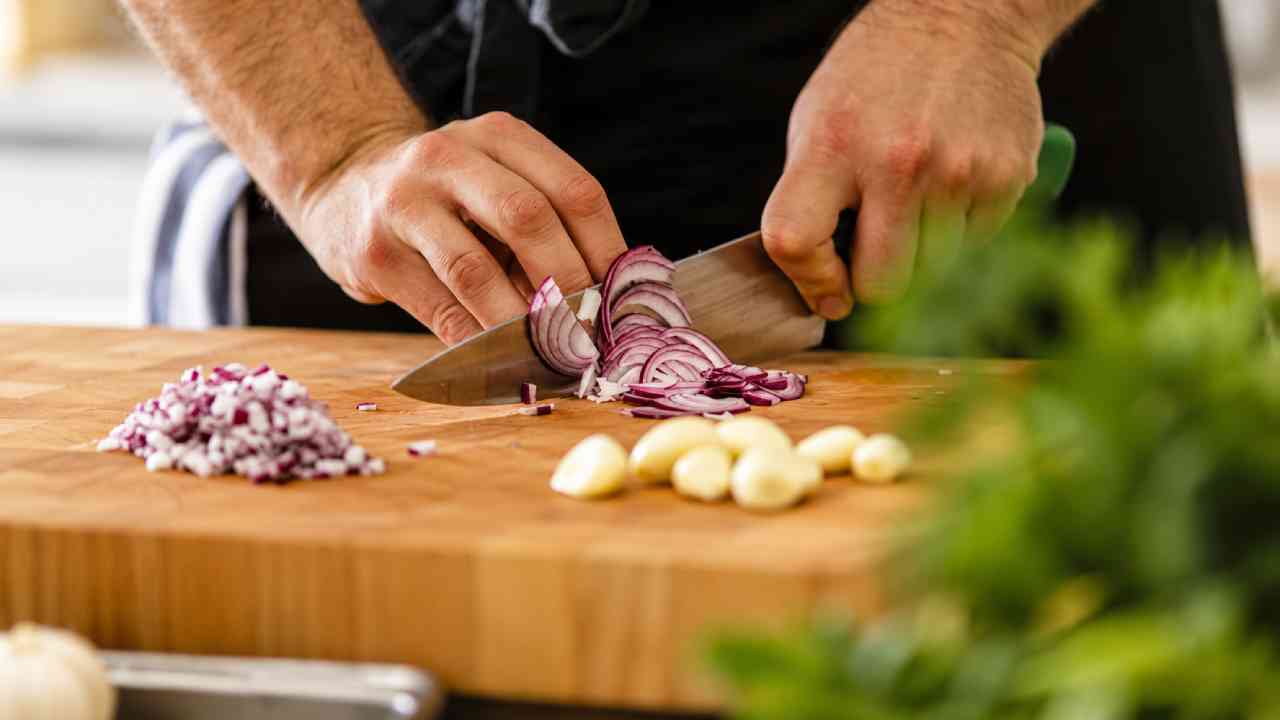
Round Rock Journal – You begin preparing dinner, place an onion on the cutting board, and make the first few slices. Soon, your eyes start stinging, and tears interrupt an otherwise ordinary kitchen task. This familiar experience has a surprisingly interesting explanation. Cutting damages the onion’s cells and starts chemical reactions that release an airborne irritant. When that substance reaches your eyes, it triggers irritation and increased tear production. Therefore, the reaction involves both plant chemistry and your body’s protective response. You do not need to touch your eyes for it to happen. The released substance can travel through the surrounding air while you continue chopping. Understanding this sequence makes the experience easier to explain. It also provides a useful starting point for choosing practical preparation methods instead of relying on kitchen folklore.
Read Also: Rupiah Nears 18,000 per US Dollar as Global Pressure Builds
The First Slice Changes What Happens Inside the Onion
An intact onion contains the ingredients for this reaction, but cutting changes how they interact. When a blade breaks the tissue, enzymes gain access to sulfur-containing compounds. One enzyme, called alliinase, helps produce an unstable intermediate. Another enzyme then helps convert that intermediate into the substance responsible for onion tears. Consequently, the irritation begins with a series of reactions rather than a ready-made cloud trapped inside the bulb. Think of the process as opening separate containers and allowing their contents to mix. The comparison simplifies the chemistry, but it captures an important idea: tissue damage brings the reaction partners together. You do not need to remember every chemical name to understand the sequence. First comes damaged tissue, then chemical conversion, followed by the release of an irritating substance into the air.
Meet the Small Molecule Behind the Stinging Sensation
The main tear-inducing substance has a technical name: syn-propanethial S-oxide. Scientists also call it the onion’s lachrymatory factor, meaning its tear-producing factor. Although the name looks complicated, its role is straightforward. It is a volatile compound that can leave freshly damaged onion tissue and reach nearby eyes. Importantly, the distinctive smell of an onion does not fully explain the irritation. Onion chemistry produces several substances, and the tear-inducing factor has its own specific identity. This distinction helps explain why recognizing an onion’s aroma and experiencing watery eyes are related but different events. For everyday readers, the useful point is the connection between a molecule and a familiar sensation. A small chemical product formed during chopping can change the entire experience of preparing a meal.
Your Tears Are a Response to an Unwanted Irritant
Once the airborne irritant reaches your eyes, the tear glands respond. The resulting tears are a physical reaction to exposure, even if you feel perfectly happy while cooking. That explains why the experience can begin without any emotional trigger. However, it can still feel frustrating when watering eyes interrupt careful knife work. From a practical perspective, continuing to chop while your vision becomes blurred is an unnecessary distraction. Pause, step away from the cutting area, and give yourself time before resuming. This approach does not require you to understand detailed eye physiology. It simply recognizes that clear vision matters during food preparation. The broader lesson is equally useful: ordinary kitchen experiences can reveal how quickly the body reacts to its surroundings. Onion tears provide a visible example of that response in action.
Why Do Onions Need More Than One Enzyme to Produce Tears?
The chemistry becomes more interesting when you look beyond the first reaction. Researchers identified the enzyme lachrymatory-factor synthase as a necessary participant in producing the tear-inducing compound. A study published in Nature in 2002 helped clarify this step. Instead of treating the irritating substance as a simple spontaneous by-product, the research showed the importance of a specific enzyme. This finding gives a familiar kitchen question a deeper scientific dimension. It also shows why clear explanations sometimes change as researchers examine a process more closely. For readers, the important distinction is between knowing what happens and understanding how it happens. People have observed onion tears for generations. Identifying the enzyme provided a more precise explanation for an experience that was already widely recognized. Familiarity with an event does not mean its mechanism is immediately obvious.
Read Also: How to Give Clear Feedback Without Putting Others Down
Research on Tearless Onions Reveals a Useful Connection
Scientists have also explored onions that produce less of the tear-inducing factor. For example, a study in Scientific Reports described the development and characterization of tearless, non-pungent onions. This research connects the everyday inconvenience of chopping with the underlying chemistry of the plant. However, it does not mean that every onion sold as mild will produce no irritation. The study concerns particular plant lines and measured characteristics, so its results should remain within that context. What makes the work interesting is the possibility of changing a familiar experience by changing the processes behind it. Rather than treating onion tears as an unavoidable mystery, researchers can examine the compounds and enzymes involved. From an educational perspective, this is a strong example of how basic scientific understanding can inform practical questions about ingredients people use regularly.
Chilling the Onion Can Help Reduce the Tears
For a practical preparation step, Poison Control reports a recommendation to chill onions for about 30 minutes before cutting. This method may reduce tearing, although it does not guarantee a completely comfortable experience. Treat it as a preparation option rather than a promise. You can place the onion in the refrigerator while gathering your other ingredients and arranging the workspace. That makes the waiting period part of the cooking routine instead of an extra interruption. Afterward, prepare the cutting board and position yourself comfortably before beginning. If irritation still develops, pause rather than rushing through the remaining cuts. In my view, a useful kitchen tip should be simple enough to repeat without creating additional complications. Brief chilling fits that principle because it requires little equipment and can be incorporated into an ordinary meal-preparation schedule.
A Better Explanation Makes Kitchen Advice Easier to Judge
Finally, understanding the mechanism gives you a useful way to assess advice about onion tears. Ask whether a suggestion explains how it might change the reaction or reduce exposure. Also, distinguish a possible benefit from a guaranteed result. A tip can be reasonable without working equally well in every kitchen. This approach encourages curiosity while keeping expectations realistic. You can observe your own preparation routine, compare the experience, and decide whether a change is worth repeating. Avoid turning one successful attempt into a universal claim. Cooking involves many small differences, and a single observation rarely settles a scientific question. The same habit applies beyond onions: identify the explanation, check the evidence, and describe the result carefully. An everyday inconvenience can become an approachable lesson in chemistry and thoughtful reasoning, adding a little understanding to the next meal you prepare.