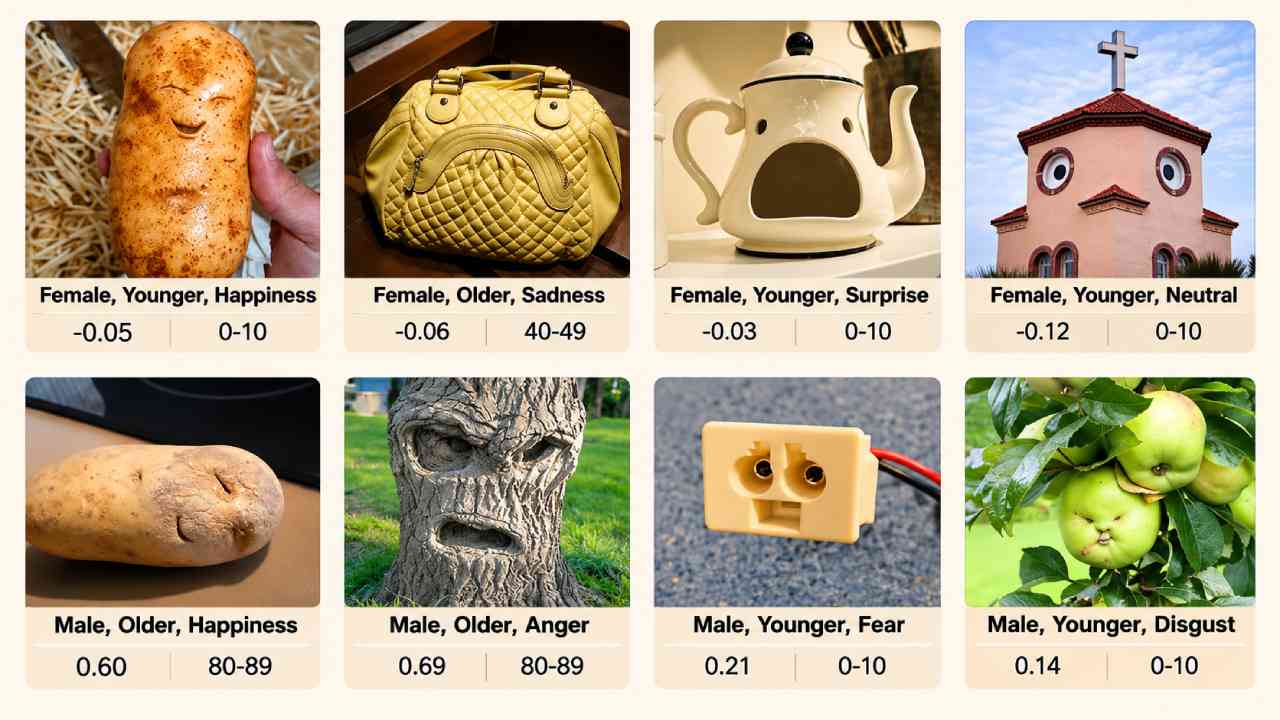
Round Rock Journal – Understanding Pareidolia reveals why the human brain sometimes recognizes familiar faces in ordinary objects. From smiling electrical outlets to mysterious shapes in clouds, this fascinating psychological phenomenon appears in everyday life. Although these objects have no actual facial features, our brains naturally search for recognizable patterns. Moreover, this ability connects closely with visual perception, memory, and human evolution. By exploring pareidolia, we can better understand how the brain interprets the world around us.
Understanding Pareidolia and the Fascinating Science Behind It
Have you ever noticed a smiling face on a coffee cup or a surprised expression on an electrical outlet? These unusual experiences are examples of pareidolia. This psychological phenomenon occurs when the brain recognizes familiar patterns in ambiguous visual information. Interestingly, faces are among the most common patterns people identify. For example, two circular shapes may resemble eyes, while a curved line appears to form a mouth. Together, these simple features can create the impression of a human face. However, the object itself contains no actual facial expression. Instead, the brain interprets its arrangement through familiar visual patterns. Understanding Pareidolia helps explain why ordinary objects sometimes appear surprisingly human. Furthermore, this experience demonstrates how quickly our minds organize visual information. What seems like a strange coincidence is actually connected to normal brain activity.
Why the Human Brain Recognizes Faces So Easily
The human brain is highly skilled at recognizing faces. This ability supports communication, social relationships, and everyday interactions. From an early age, humans show sensitivity to face-like visual arrangements. Consequently, even simple patterns can attract our attention. For instance, two dots above a horizontal line may resemble a face. Although the pattern contains little information, the brain quickly creates a familiar interpretation. Researchers have linked face perception to specialized networks within the visual system. One important region is the fusiform face area, which responds strongly during face processing. However, recognizing faces involves several interacting brain regions rather than one isolated structure. Therefore, face pareidolia reflects a broader process of visual recognition. Understanding Pareidolia also highlights how the brain prioritizes socially meaningful information. This sensitivity helps explain why faces appear so frequently in unexpected places.
Read Also: Tempe Lado Mudo Recipe: Spicy Indonesian Tempeh
Everyday Objects That Commonly Trigger Face Pareidolia
Face pareidolia can appear almost anywhere. Kitchen appliances, household furniture, and vehicles often contain arrangements that resemble human expressions. For example, a car’s headlights may look like eyes. Meanwhile, its front grille can resemble a smiling or angry mouth. Electrical outlets provide another familiar example. Their openings sometimes create the appearance of a surprised face. Similarly, building windows and doors may form recognizable facial patterns. Nature also offers countless examples. Tree bark, rocks, clouds, and vegetables can display unusual face-like arrangements. Interestingly, different people may interpret the same object differently. One person might notice a happy expression, while another sees something entirely unrelated. This variation reflects differences in attention and visual interpretation. Therefore, Understanding Pareidolia begins with recognizing how common these experiences are. Everyday surroundings provide endless opportunities to observe the phenomenon.
How Visual Perception Creates Meaning from Random Patterns
Visual perception involves more than simply receiving information through the eyes. The brain actively organizes sensory input into meaningful shapes and objects. This process combines incoming visual details with existing knowledge. Psychologists often describe this interaction through bottom-up and top-down processing. Bottom-up processing begins with information received from the environment. Meanwhile, top-down processing uses memory, expectations, and previous experiences. Pareidolia can emerge when these processes produce a familiar interpretation of an ambiguous pattern. For example, shadows on a wall may resemble a person’s face. However, changing the lighting can make that impression disappear. This happens because the available visual information has changed. Understanding Pareidolia reveals how perception depends on both external details and internal interpretation. Consequently, what we see does not always match the actual identity of an object.
Why Clouds and Rocks Often Look Like Human Faces
Clouds and rocks frequently create striking examples of pareidolia. Their irregular shapes provide countless opportunities for familiar patterns to emerge. For instance, a cloud formation may resemble a smiling face from one viewing angle. A few minutes later, the same cloud might look completely different. Wind and atmospheric movement constantly reshape its appearance. Similarly, rocks develop complex surfaces through weathering, erosion, and natural geological processes. Cracks, shadows, and uneven textures can accidentally resemble facial features. Moreover, sunlight changes how these surfaces appear throughout the day. A rock that looks like a human profile in the morning may appear ordinary by afternoon. Understanding Pareidolia helps explain why these natural formations inspire imaginative interpretations. Nevertheless, the perceived faces do not indicate intentional design. They result from the brain recognizing familiar arrangements within naturally occurring patterns.
The Connection Between Pareidolia and Human Evolution
Scientists have explored whether face pareidolia relates to the evolutionary importance of recognizing other people. Detecting faces quickly can support social awareness and communication. Therefore, sensitivity to face-like patterns may offer advantages in certain situations. For example, recognizing another person’s presence can help individuals respond appropriately. However, the evolutionary explanation for pareidolia remains a hypothesis rather than a fully established account. Researchers continue examining how visual systems respond to ambiguous facial patterns. Some findings suggest that face-like objects can activate processes associated with genuine face perception. Nevertheless, these responses do not mean the brain treats every object exactly like a real face. Understanding Pareidolia requires distinguishing scientific evidence from broader evolutionary interpretations. Even so, the phenomenon illustrates how strongly human perception favors meaningful visual information. Our brains often identify possible patterns before carefully examining every detail.
Is Pareidolia a Normal Psychological Experience?
Pareidolia is generally considered a normal feature of human perception. Many people experience it without any psychological or neurological disorder. For example, seeing a face in a cloud does not indicate a mental health problem. Instead, it reflects the brain’s tendency to recognize familiar patterns. Importantly, pareidolia differs from hallucination. Pareidolia involves interpreting an actual external stimulus, such as a shadow or object. A hallucination involves a perception without a corresponding external stimulus. Furthermore, people experiencing ordinary pareidolia usually recognize that the perceived face is not real. However, persistent or distressing perceptual experiences may require professional assessment, especially when reality becomes difficult to distinguish. Understanding Pareidolia helps prevent unnecessary misunderstandings about this common experience. Therefore, recognizing faces in everyday objects should not automatically cause concern.
How Emotions and Expectations Influence Pareidolia
Emotions and expectations can influence how people interpret ambiguous visual patterns. For example, someone searching for faces in a photograph may notice them more quickly. Meanwhile, another person might overlook the same patterns entirely. This difference highlights the role of attention in perception. Previous experiences can also influence which shapes appear familiar. Additionally, emotional context may affect how people interpret apparent facial expressions. A curved line might look like a friendly smile. However, a downward angle could create the impression of sadness or anger. These interpretations depend partly on the viewer and the surrounding context. Understanding Pareidolia reveals how perception involves more than physical appearance alone. The brain also draws upon expectations and learned associations. Consequently, two individuals can observe the same object while describing completely different impressions.
Why Face Pareidolia Often Creates Funny Facial Expressions
One entertaining feature of pareidolia involves the expressions people notice on ordinary objects. Some objects appear cheerful, while others seem angry, confused, or surprised. For example, the front of a vehicle may resemble an aggressive face because of its angled headlights. Meanwhile, a round appliance with two buttons may appear friendly. These impressions emerge because the brain associates certain shapes with familiar facial expressions. Raised or curved features can influence how an apparent face is interpreted. Interestingly, designers sometimes use similar principles intentionally. Product shapes can create playful or approachable impressions. However, accidental face pareidolia remains different from deliberate character design. Understanding Pareidolia explains why people often photograph amusing objects and share them online. These images attract attention because they transform ordinary surroundings into recognizable expressions.
The Relationship Between Pareidolia, Creativity, and Imagination
Pareidolia can provide inspiration for artists, designers, and creative thinkers. Recognizing unexpected patterns encourages people to explore alternative interpretations of familiar objects. For instance, an illustrator might notice a character hidden within a paint stain. That accidental shape could become the starting point for a new drawing. Similarly, photographers may capture buildings that resemble faces. These images often create humorous or thought-provoking compositions. Moreover, creative activities involving clouds or abstract shapes can encourage visual exploration. However, pareidolia and creativity are not identical psychological processes. Recognizing a familiar pattern does not automatically indicate exceptional creative ability. Instead, the phenomenon offers opportunities to practice observation and imaginative thinking. Understanding Pareidolia shows how everyday perception can inspire artistic ideas. Even simple household objects may become interesting subjects when viewed from a different perspective.
How Scientists Study Pareidolia and Facial Recognition
Researchers investigate pareidolia using behavioral experiments and brain-imaging techniques. In some studies, participants view photographs containing real faces, face-like objects, and ordinary objects. Scientists then examine how quickly participants recognize facial patterns. Additionally, researchers may measure brain activity during these tasks. Electroencephalography, or EEG, can reveal the timing of electrical responses associated with visual processing. Functional magnetic resonance imaging, or fMRI, helps identify brain regions involved in face perception. These methods provide complementary information about how visual recognition works. However, experimental results depend on the images, participants, and methods used. Therefore, findings should be interpreted within their specific research context. Understanding Pareidolia through scientific research helps clarify the relationship between object recognition and face processing. It also provides valuable insights into how the brain handles uncertain visual information.
Simple Ways to Explore Pareidolia Through Everyday Observation
Exploring pareidolia can become an enjoyable educational activity. Begin by observing familiar objects around the house. Look at electrical outlets, furniture, kitchen appliances, and building surfaces. Next, notice whether any arrangements resemble eyes, noses, or mouths. You can also examine cloud formations during a clear afternoon. However, avoid looking directly at the sun while observing the sky. Another interesting activity involves photographing objects that appear to have facial expressions. Afterward, compare the images with friends or family members. Different interpretations can lead to engaging discussions about visual perception. Additionally, children can use these observations to learn about patterns and imagination. Understanding Pareidolia becomes easier when abstract psychological concepts connect with everyday experiences. Through simple observation, people can discover how actively the brain interprets the surrounding world.