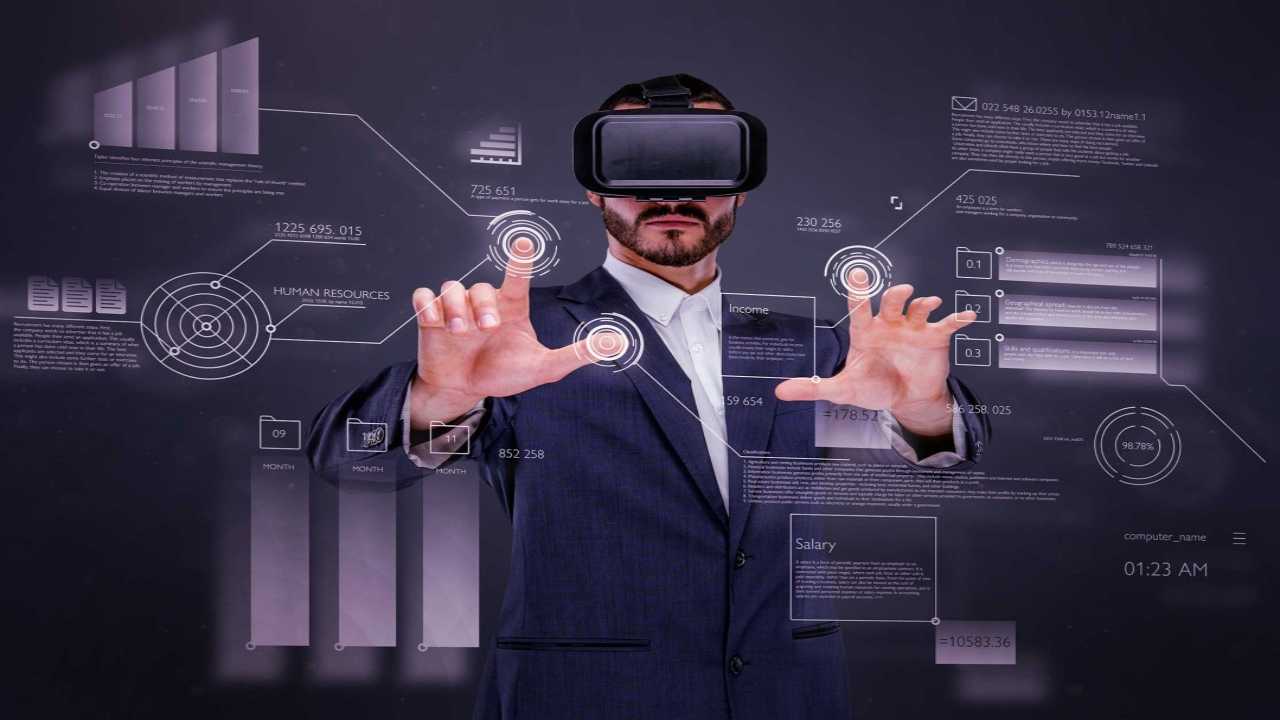
Round Rock Journal – Virtual Reality, often abbreviated as Virtual Reality, has become one of the most exciting technologies of the digital era. While it once seemed like something from science fiction movies, it is now used in gaming, education, healthcare, training, and even tourism. Simply put, Virtual Reality creates a computer-generated environment that allows users to feel as if they are physically present in a different world. As technology continues to evolve, Virtual Reality is becoming more accessible and realistic. Consequently, millions of people around the world are exploring its potential beyond entertainment. Understanding how this technology works can help explain why it is shaping the future of digital experiences.
Read Also: Thomas Tuchel’s Bold Decisions Power England to a Thrilling 4-2 Victory Over Croatia
Understanding the Basic Concept of Virtual Reality
At its core, Virtual Reality is a technology that immerses users in a simulated environment. Unlike traditional screens that display content from a distance, Virtual Reality places the user inside a three-dimensional digital world. As a result, individuals can look around, move, and interact with virtual objects as though they were real. Furthermore, the experience feels more engaging because the environment responds to the user’s movements in real time. This unique ability to create presence is what distinguishes Virtual Reality from conventional digital media. Therefore, many industries view it as a revolutionary tool for communication and learning.
How Virtual Reality Headsets Create Immersion
The most recognizable component of Virtual Reality is the headset. These devices contain high-resolution screens positioned close to the user’s eyes. Additionally, lenses adjust the images to create a realistic sense of depth. As users move their heads, built-in sensors track their motion and update the virtual environment instantly. Consequently, the digital world appears stable and believable. Without this synchronization, the illusion would quickly disappear. Modern headsets also feature improved refresh rates and sharper visuals, making Virtual Reality experiences more comfortable and immersive than ever before.
The Role of Motion Tracking Technology
Motion tracking is a crucial element that makes Virtual Reality feel natural. Sensors located inside headsets and controllers continuously monitor movement. As a result, users can turn their heads, walk, reach for objects, or perform actions within the virtual space. Furthermore, advanced systems can track hand gestures and even full-body movement. This level of responsiveness enhances realism and encourages deeper engagement. Therefore, motion tracking plays a vital role in transforming Virtual Reality from a simple viewing experience into an interactive environment where users actively participate.
Why Virtual Reality Is Popular in Gaming
Gaming remains one of the biggest drivers of Virtual Reality adoption. Unlike traditional games played on televisions or monitors, Virtual Reality allows players to become part of the action. For example, users can explore fantasy worlds, participate in sports simulations, or engage in adventure games from a first-person perspective. Consequently, the level of immersion feels far more intense. Moreover, developers continue creating innovative experiences that take advantage of motion controls and spatial interaction. As a result, Virtual Reality gaming continues to attract enthusiasts looking for more engaging forms of entertainment.
How Education Benefits From Virtual Reality
Beyond gaming, Virtual Reality has created new opportunities in education. Students can visit historical landmarks, explore the human body, or conduct virtual science experiments without leaving the classroom. Furthermore, complex concepts become easier to understand when learners can visualize them in three dimensions. Many educators believe that immersive learning improves engagement and information retention. Consequently, schools and training institutions are increasingly exploring Virtual Reality as a supplement to traditional teaching methods. This educational potential demonstrates that the technology offers value far beyond entertainment.
Virtual Reality Applications in Healthcare
Healthcare professionals are also finding innovative uses for Virtual Reality. Medical students can practice procedures in risk-free virtual environments before treating real patients. Additionally, surgeons use simulations to improve skills and prepare for complex operations. Meanwhile, therapists have incorporated Virtual Reality into treatments for anxiety, phobias, and rehabilitation programs. Because these simulations provide controlled and repeatable experiences, patients can progress at a comfortable pace. Therefore, Virtual Reality is becoming an important tool in modern healthcare and professional training.
Read Also: The Power of Small Wins in Building Lasting Motivation
The Growing Use of Virtual Reality in Business
Businesses are increasingly adopting Virtual Reality for meetings, product demonstrations, and employee training. Instead of traveling long distances, teams can collaborate within virtual environments that simulate real-world interactions. Furthermore, companies use Virtual Reality to showcase products and services in engaging ways. For example, customers can explore virtual showrooms before making purchasing decisions. Consequently, organizations can improve efficiency while reducing costs. As technology continues to mature, business applications are expected to expand significantly across multiple industries.
Challenges Facing Virtual Reality Technology
Although Virtual Reality offers many advantages, several challenges remain. High-quality hardware can still be expensive for some consumers. Additionally, prolonged use may cause discomfort or motion sickness in certain individuals. Furthermore, creating realistic virtual environments requires significant computing power and development resources. However, these limitations are gradually being addressed through technological advancements. As hardware becomes lighter, more affordable, and more powerful, Virtual Reality is expected to reach an even broader audience. Therefore, current challenges are unlikely to prevent long-term growth.
The Future of Virtual Reality
The future of Virtual Reality appears promising as innovation continues to accelerate. Advances in artificial intelligence, spatial computing, and wearable technology are expected to make virtual experiences even more realistic. In addition, future devices may become smaller, lighter, and easier to use. Consequently, Virtual Reality could become a common part of daily life for work, learning, entertainment, and social interaction. While the technology is still evolving, its influence is already visible across many sectors. Ultimately, Virtual Reality represents a significant step toward a more immersive and interactive digital future.