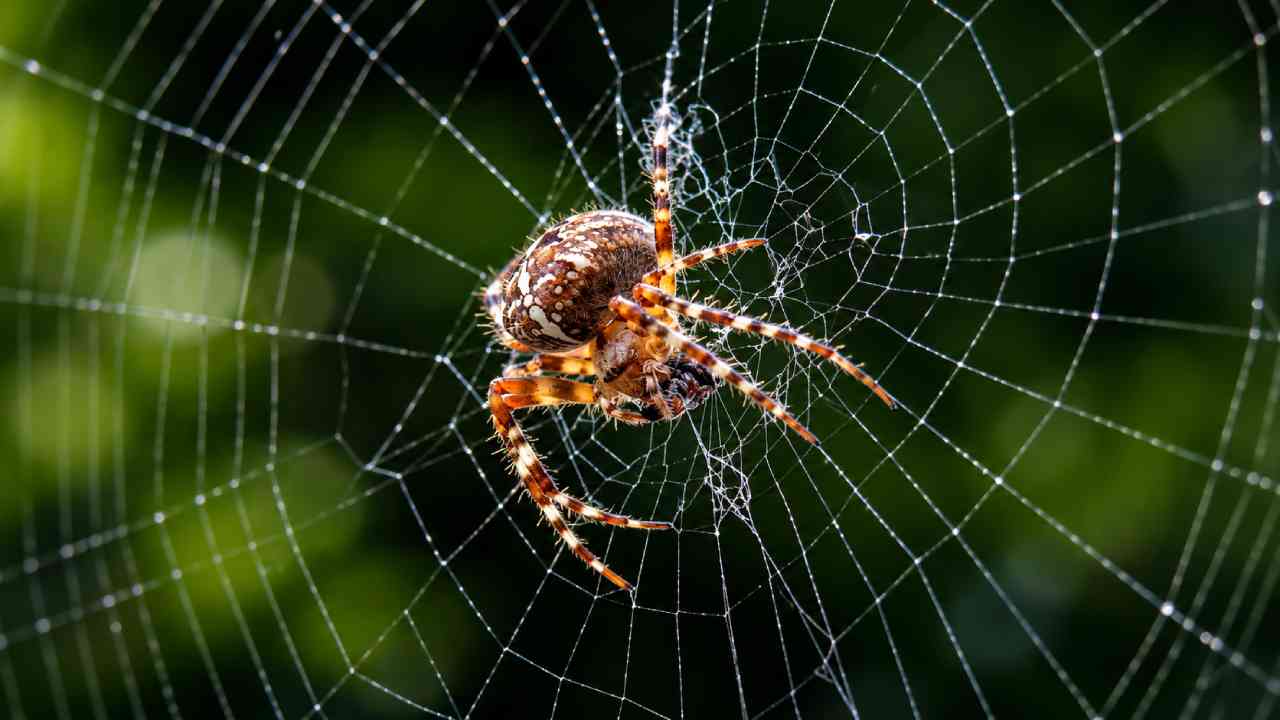
Round Rock Journal – Spiders can create structures that look almost too precise to come from nature. Yet every complex web begins with a simple strand of silk. An orb-weaving spider may release a fine thread into the air. A light breeze can carry it toward a nearby branch, leaf, or other surface. Once the silk catches, the spider tests the connection and strengthens it. This first bridge becomes the foundation for much of the structure that follows. Next, the spider moves across the thread and adds more supporting lines. It gradually creates a stable frame around an open area. Although the process looks carefully planned, spiders do not need rulers or drawings. Instead, their behavior relies heavily on instinct and sensory feedback. This natural building method is efficient, flexible, and remarkably reliable. As a result, a tiny animal can create an impressive structure using only material produced by its own body.
Read Also: Alan Shearer Questions Whether Jurgen Klopp Can Restore Germany’s Glory
Spider Silk Comes From Specialized Organs
The silk used by spiders does not simply appear from their legs. It comes from silk glands inside the abdomen. These glands connect to structures called spinnerets near the rear of the body. Different glands can produce silk with different properties and functions. Therefore, one spider may use several types of silk during its life. Some silk forms strong structural lines, while other silk helps capture prey. Spiders may also use silk to protect eggs, wrap prey, build shelters, or create safety lines. The material mainly consists of proteins arranged in a way that gives the fibers useful mechanical properties. Moreover, spiders can control how silk leaves their spinnerets as they move. This allows them to place threads where they are needed. The result is a biological construction material that combines low weight with impressive performance. In many species, silk is not merely a tool for making webs. It supports several essential parts of daily survival.
Radial Threads Create the Web’s Basic Framework
Once the outer frame becomes secure, many orb-weaving spiders begin creating radial threads. These strands extend between the central area and the outer structure. Visually, they resemble the spokes of a bicycle wheel. However, their role is more important than appearance alone. Radial threads distribute tension throughout the web and provide routes for the spider. They also transmit vibrations when something touches the structure. During construction, the spider repeatedly travels between different points. It attaches new silk while responding to the position and tension of existing threads. Consequently, the framework becomes organized without requiring perfect geometric measurements. Small irregularities are common, especially when branches or leaves create uneven anchor points. Still, the overall structure remains highly functional. This is an important detail because natural spider webs are not always perfectly symmetrical. Their beauty comes partly from the balance between biological precision and environmental adaptation. Each web reflects both instinctive behavior and the physical space available around it.
A Spiral Pattern Turns the Framework Into a Trap
After creating the basic framework, an orb-weaving spider can begin adding spiral elements. First, some species create a temporary spiral that helps maintain spacing during construction. Later, the spider adds the capture spiral, which is designed to help stop prey. This part may contain adhesive material that makes escape difficult for small insects. Meanwhile, the spider carefully moves around the radial threads and places new silk at repeated intervals. The resulting pattern can look impressively regular to human eyes. However, it is not created for decoration. Every section has a practical role in making the web an effective hunting structure. Furthermore, spacing can vary according to species, body size, and environmental conditions. A web built between garden plants may differ from one built under a roof. Even so, the basic strategy remains efficient. The spiral increases the area available for intercepting flying insects while keeping the entire structure relatively light.
Spiders Use Touch and Vibration While Building
Spiders do not depend on eyesight alone when constructing webs. In fact, many web-building species rely strongly on touch and vibration. Their legs contain sensitive structures that detect mechanical information from silk threads. As the spider moves, it can respond to tension, movement, and contact across the web. Therefore, the web acts as both a physical structure and an extension of the spider’s sensory world. These signals become especially useful after construction. A trapped insect creates vibrations as it struggles. The spider can detect those movements and respond quickly. However, not every vibration means food has arrived. Wind, falling leaves, and other environmental disturbances can also shake the web. Spiders must react to different patterns of movement in useful ways. This makes a web far more interesting than a passive trap. It functions as a lightweight sensory network. Through silk and vibration, the spider can receive information from areas beyond the immediate reach of its body.
Strong Silk Still Needs Flexibility to Work Well
Spider silk is famous for its strength, yet strength alone would not make an effective web. The material also needs flexibility. A rigid structure could break when a fast-moving insect hits it. In contrast, silk can absorb energy by stretching while remaining functional. This combination allows many webs to survive sudden impacts and movement. People often hear that spider silk is stronger than steel. However, that comparison requires context because strength can be measured in several ways. Silk and steel also have very different structures, densities, and uses. Therefore, simple claims can be misleading. What makes spider silk remarkable is its combination of useful properties. It can be lightweight, strong, flexible, and produced under ordinary biological conditions. Scientists have studied these qualities for years because they offer inspiration for material research. From a light education perspective, spider silk provides a fascinating example of how evolution can produce materials that solve several mechanical problems at once.
Spiders Avoid Getting Trapped in Their Own Webs
A common question is why spiders do not constantly become stuck in their own webs. The answer begins with the fact that every thread does not have the same function. In many orb webs, structural lines differ from the sticky capture spiral. Therefore, spiders can often move along selected routes that reduce contact with adhesive areas. Their movements are also controlled and deliberate. Instead of rushing randomly across the web, they place their legs carefully as they travel. In addition, features of their legs can help limit unwanted contact with sticky material. However, this does not mean spiders are magically immune to their own adhesive silk. They simply have behaviors and physical adaptations that make movement across the structure more manageable. This distinction is important because it shows how the entire system works together. Silk properties, web architecture, sensory abilities, and movement patterns all contribute to efficient web use. Nature rarely depends on only one clever solution.
Read Also: How to Face Your Mistakes Without Getting Trapped in Regret
Every Web Reflects Its Surrounding Environment
Spider webs may look like fixed blueprints, but the environment influences their final form. A spider must work with the anchor points available around it. Branches may sit at uneven distances, while wind can move leaves during construction. Rain can also damage existing silk. As a result, spiders often build webs that are slightly irregular while still remaining effective. Some species repair damaged sections rather than replacing the entire structure. Others regularly rebuild large parts of their webs. Certain orb weavers may even consume old silk and reuse some of its nutrients. This behavior shows how valuable silk production can be. Moreover, web location matters as much as construction quality. A beautifully formed web offers little advantage if insects rarely pass through the area. Therefore, spiders must combine building behavior with suitable site selection. The finished structure represents a practical response to both biological needs and changing environmental conditions.
Spider Webs Reveal the Engineering Hidden in Nature
Watching spiders build webs can change how we view an ordinary garden corner. What appears to be a delicate collection of threads is actually a multifunctional biological structure. It can capture prey, carry vibrations, support movement, and respond to physical stress. Moreover, the spider produces its construction material within its own body. No external tools are required. This combination makes web building an extraordinary example of natural engineering. Still, it is useful to avoid describing every web as perfectly geometric. Real webs contain variations, repairs, and adjustments. Those imperfections often show how well spiders adapt to real environments. From an educational perspective, spider webs connect biology with physics, materials science, and animal behavior. They demonstrate how simple actions can create complex results over time. Most importantly, they remind us that impressive engineering does not always involve machines. Sometimes, it appears quietly between two branches and weighs almost nothing.