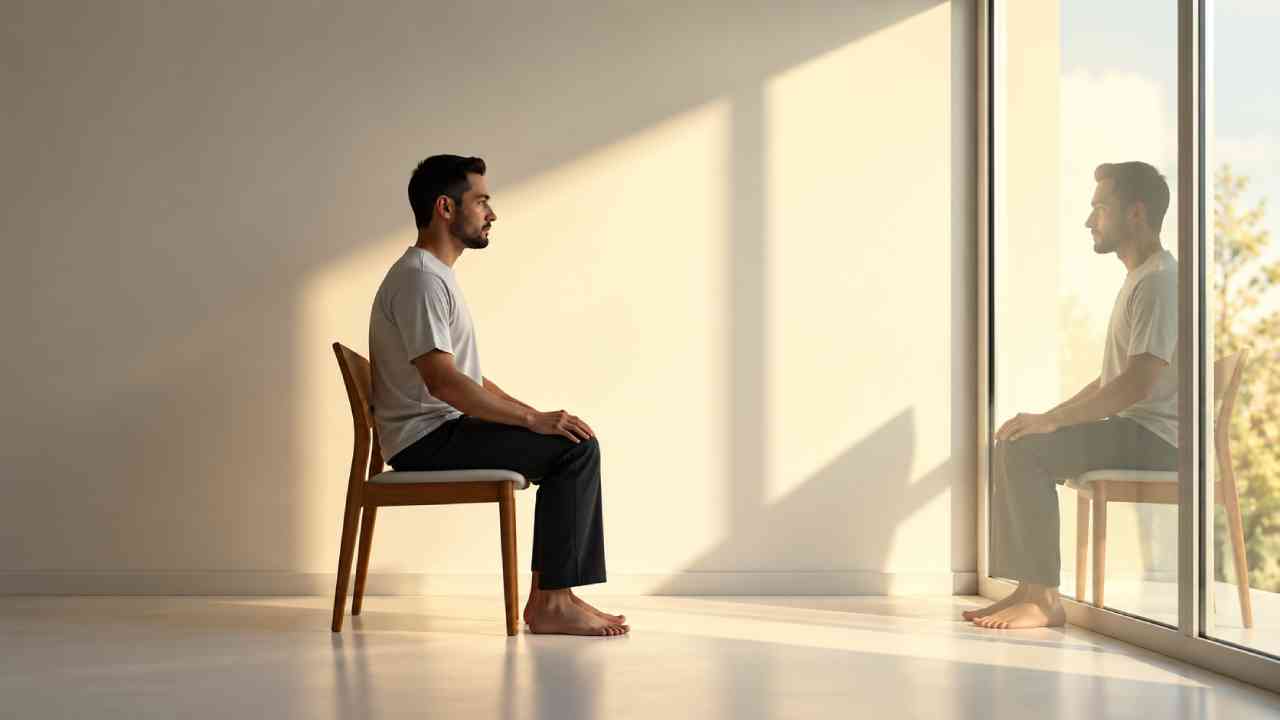
Round Rock Journal – Personal problems often feel bigger when we stand too close to them emotionally. A disagreement, rejection, or mistake can quickly dominate our thoughts. Self-Distancing offers another way to examine those moments. Instead of viewing an experience only through your immediate emotions, you mentally step outside the situation. Then, you observe what happened from a wider perspective. Imagine watching yourself as a character in a story. What would you notice about that person’s choices, emotions, and circumstances? This small shift can make a difficult situation easier to examine. However, the goal is not to ignore feelings or pretend that nothing happened. Instead, it creates enough psychological space to think more clearly. In everyday life, this perspective can be useful when emotions make balanced reflection difficult. Sometimes, the problem itself has not changed. Yet the distance between you and the problem can change how you understand it.
Read Also: Rupiah Nears 18,000 per US Dollar as Global Pressure Builds
Why Third-Person Perspective Can Change Your Inner Conversation
Our internal conversations often become personal during difficult moments. After making a mistake, someone might think, “Why do I always get this wrong?” That question can quickly turn one event into a judgment about identity. With Self-Distancing, the language changes. Instead, you might ask what happened, what influenced the decision, and what could be done differently next time. Some people also find it useful to refer to themselves by name during reflection. This approach can make the inner conversation feel more like thoughtful advice than emotional criticism. As a result, attention moves from identity toward behavior and circumstances. That distinction matters. A poor decision does not automatically define the person who made it. Likewise, one rejection does not describe an entire future. Therefore, third-person reflection can provide a wider frame. It encourages curiosity about the experience instead of turning every setback into a permanent personal label.
Self-Distancing Is Different from Avoiding Difficult Emotions
At first, stepping away from an emotional experience may sound like avoidance. However, the two approaches are different. Avoidance usually involves refusing to engage with an uncomfortable situation. Self-Distancing, by contrast, still requires you to examine what happened. You simply change the position from which you observe it. Imagine standing very close to a large painting. You may notice individual brushstrokes, but the complete image remains difficult to see. Move several steps backward, and the wider composition becomes clearer. Personal experiences can work in a similar way. Strong emotions deserve attention, yet they can sometimes narrow our focus. Therefore, gaining perspective does not mean rejecting those emotions. It means placing them within a larger context. You can acknowledge disappointment while also considering what you learned. You can recognize frustration while asking what remains within your control. In this sense, distance becomes a tool for reflection rather than escape.
A Simple Question Can Create Useful Psychological Distance
One practical way to create distance is surprisingly simple. Ask yourself, “What advice would I give a friend in this situation?” Many people speak to friends with more patience and perspective than they use with themselves. For example, imagine that you failed to get a job you wanted. Your immediate thought might be that you were not good enough. However, if a friend experienced the same rejection, you would probably consider other possibilities. Perhaps the employer needed different experience. Maybe another candidate matched a specific requirement. You might also encourage your friend to improve certain skills before applying again. Self-Distancing brings that broader reasoning into your own reflection. Consequently, the event becomes information rather than a final judgment. The disappointment can still be real. Nevertheless, you gain room to explore what happened without allowing one result to define your abilities or future opportunities.
Using Your Own Name Can Shift the Way You Reflect
Another interesting technique involves changing the language of your inner dialogue. Instead of asking, “What should I do?” try using your own name. For example, ask, “What should Alex consider before making this decision?” This subtle change may feel unusual at first. However, it can make reflection feel less emotionally immediate. You begin to examine yourself almost as you would observe another person. From there, additional questions become easier to ask. What information is missing? What assumptions might be influencing the decision? outcome matters most? Moreover, this method can be useful before an important conversation. You might consider how an outside observer would describe both sides of the disagreement. That does not mean every perspective carries equal weight. Rather, the exercise helps separate observable facts from immediate reactions. With practice, Self-Distancing can become a simple mental tool for approaching difficult moments with greater perspective.
Self-Distancing Can Help After Mistakes and Setbacks
Mistakes often trigger two very different responses. The first focuses on identity: “I failed, so I must be incapable.” The second focuses on information: “This did not work, so what can I learn?” The second approach creates more room for growth. Self-Distancing can support that shift by encouraging you to examine the event as an experience rather than a definition of yourself. Start with the facts. What happened? Which choices contributed to the result? What factors were outside your control? Then, identify one adjustment you could make next time. This process does not guarantee that disappointment disappears. Instead, it gives the disappointment somewhere productive to go. Furthermore, separating identity from a single outcome can make reflection more specific. You can improve a skill, change a strategy, or gather better information. Those actions are far more useful than making broad judgments about your worth based on one difficult moment.
Perspective Becomes Valuable During Personal Conflict
Arguments are another situation where psychological distance may help. During conflict, people naturally focus on what they heard, felt, or intended. Meanwhile, the other person may remember the same conversation differently. Before responding, imagine observing the interaction from outside the room. What would a neutral observer actually see and hear? Which statements are facts, and which are interpretations? This exercise can reveal details that intense emotions make harder to notice. For instance, you may realize that the disagreement started from a misunderstanding rather than a major difference in values. Alternatively, distance may confirm that an important boundary was crossed. Therefore, Self-Distancing should not be used to dismiss legitimate concerns. Its purpose is clarity, not automatic compromise. Once you understand the situation more clearly, you can decide how to respond. Sometimes that means having another conversation. At other times, it may mean setting a firmer boundary or simply allowing emotions to settle first.
Read Also: Starting Over Doesn’t Mean Starting from Zero
Writing About Yourself as a Character Can Offer Perspective
Writing provides another practical way to experiment with psychological distance. Take a difficult experience and describe it as though you were writing about another person. Instead of writing, “I felt ignored during the meeting,” you might describe what the person experienced, what happened beforehand, and how others responded. Then, continue the story beyond the emotional moment. What options does this character have now? What would make the next scene different? This exercise can turn an overwhelming experience into something more structured. In addition, writing slows down thought. That extra time may help you notice assumptions that disappeared inside fast emotional reactions. However, the goal is not to create a fictional version of reality. Keep the details honest. Self-Distancing works best when distance supports clearer observation rather than rewriting uncomfortable facts. The story remains yours. You are simply viewing it through a wider lens for a moment.
Knowing When to Step Back and When to Reconnect
Psychological distance is a tool, not a permanent way of experiencing life. There are moments when stepping back can support clearer thinking. However, there are also moments when emotions need direct attention. The useful skill is knowing when to move between these perspectives. For example, you might first acknowledge that a rejection hurt. Later, once the strongest reaction has settled, you can examine the experience from a greater distance. This movement between feeling and reflection creates balance. In contrast, constantly analyzing yourself from the outside could make personal experiences feel detached. Therefore, Self-Distancing works best when used intentionally. Step back when you need perspective. Then, reconnect with your own feelings, values, and needs before deciding what comes next. Personal development is not about becoming emotionless. Instead, it involves learning how to work with emotions while still giving reason, context, and experience a place in the conversation.
A Wider View Can Reveal the Next Practical Step
Not every personal problem needs an immediate solution. Sometimes, the first useful move is simply seeing the situation differently. Self-Distancing can create that opportunity by separating the observer from the intensity of the moment. From a wider perspective, a failure may become feedback. A disagreement may reveal a communication problem. A difficult decision may become easier once assumptions are separated from facts. Most importantly, this approach encourages reflection without demanding emotional perfection. You can still feel disappointed, uncertain, or frustrated while examining the situation thoughtfully. Start small. The next time a problem feels overwhelming, imagine that someone you care about is experiencing the same situation. Consider what you would notice and what advice you would offer. Then, bring that perspective back to yourself. The circumstances may remain unchanged, but your view of them may become clearer. Often, that clearer view is enough to reveal the next practical step.