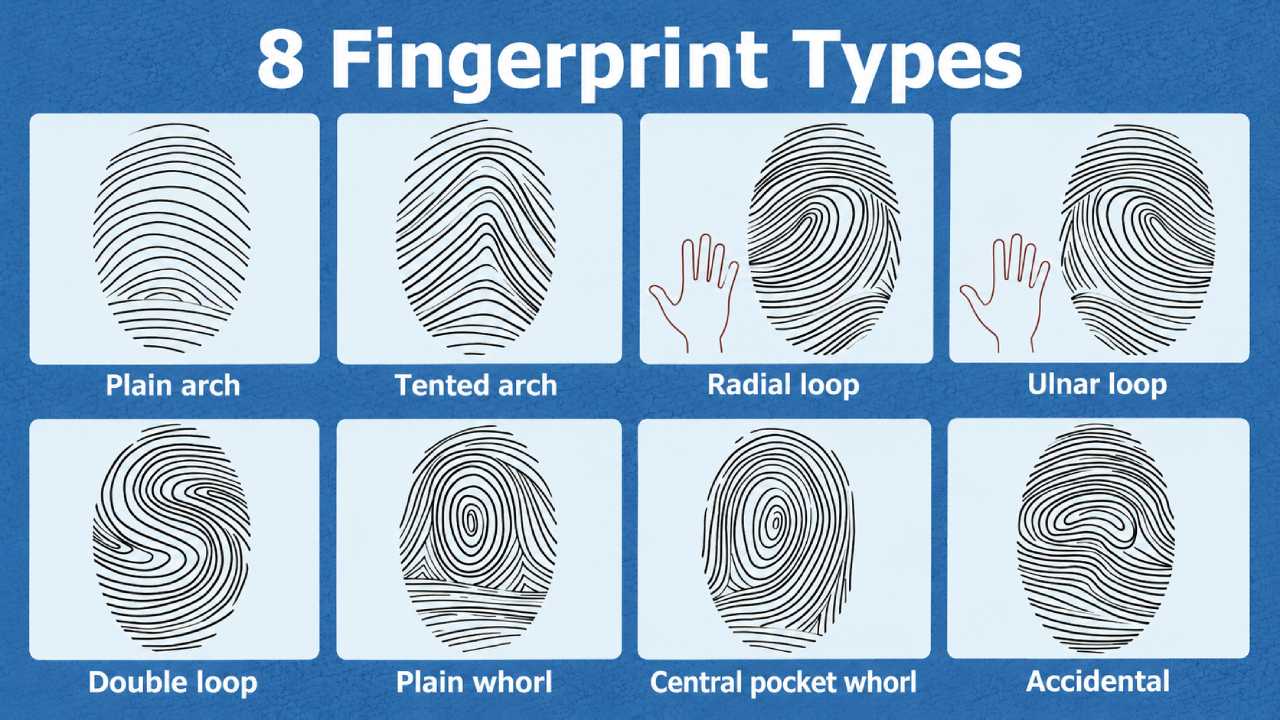
Round Rock Journal – Have you ever wondered why fingerprint scanners can identify one person from billions of people around the world? Every day, we use fingerprints to unlock smartphones, access secure systems, and verify identities. Yet, many people rarely stop to ask a simple question: Are Everyone’s Fingerprints Different? Surprisingly, the answer opens the door to one of the most fascinating stories in human biology. What appears to be a collection of tiny lines on our fingertips is actually a unique biological signature that begins forming long before birth. As science continues to explore the complexity of human development, fingerprints remain one of the most remarkable examples of individuality found in nature.
Read Also: Queen Elizabeth II Fashion Exhibition Could Become the Most Visited Royal Showcase in History
The Formation of Fingerprints Begins Before Birth
One of the most surprising facts about fingerprints is that they start developing while a baby is still in the womb. Around the tenth week of pregnancy, the skin on a fetus’s fingertips begins forming patterns that will eventually become permanent fingerprints. During this stage, many subtle factors influence the final design. For example, blood flow, fetal position, growth rate, and the movement of amniotic fluid all contribute to the process. Because these conditions vary from one fetus to another, the resulting patterns become incredibly unique. Consequently, no two fingerprints develop in exactly the same way. This early formation process helps explain why fingerprints remain one of the most reliable methods of personal identification.
Genetics Provides the Blueprint but Not the Final Design
Many people assume fingerprints are determined entirely by genetics. While DNA certainly influences the general structure of fingerprint patterns, it does not dictate every detail. In fact, genetics provides only the framework. The final appearance depends on countless environmental factors inside the womb. This explains why identical twins, who share nearly identical DNA, still have different fingerprints. Their developing fingers experience slightly different conditions during pregnancy. Therefore, even the smallest variations can produce unique ridge patterns. This combination of genetic influence and environmental development creates an extraordinary level of individuality that continues to intrigue scientists today.
Three Primary Fingerprint Patterns Found Around the World
Although every fingerprint is unique, experts generally classify them into three major categories. The most common pattern is the loop, which appears in the majority of people worldwide. In this pattern, ridges enter from one side, curve around, and exit on the same side. Another common type is the whorl, which forms circular or spiral shapes. Finally, the arch pattern creates ridges that rise in the center and flow downward on the opposite side. While these categories appear simple, the tiny details within each pattern create billions of possible combinations. As a result, fingerprint identification remains highly accurate even among large populations.
Why Fingerprints Stay the Same Throughout Life
Unlike many physical characteristics that change over time, fingerprints remain remarkably stable. Once the ridge patterns are fully formed before birth, they generally stay unchanged throughout a person’s life. Although the skin naturally grows and ages, the underlying fingerprint structure remains consistent. Even minor cuts and scratches typically heal without altering the original pattern. Only severe injuries that damage the deeper layers of skin can permanently affect fingerprints. Because of this long-term stability, fingerprints have become one of the most trusted tools in law enforcement, security systems, and personal identification technologies.
Fingerprints Play a Critical Role in Modern Security
Today, fingerprints are used far beyond traditional forensic investigations. Modern technology has transformed them into a convenient security feature found in smartphones, laptops, banking systems, and government databases. Unlike passwords, fingerprints cannot easily be forgotten or shared. Furthermore, fingerprint authentication offers a fast and user-friendly experience. Because every fingerprint contains highly distinctive details, security systems can quickly verify identities with impressive accuracy. As biometric technology continues to evolve, fingerprints remain at the center of many digital security solutions worldwide.
Read Also: 7 Small Habits That Can Change Your Life in a Year
Scientists Still Discover New Insights About Fingerprints
Despite decades of research, fingerprints continue to reveal new scientific mysteries. Researchers have recently explored how fingerprint ridges may improve grip by increasing friction when handling objects. Others study how fingerprint development can provide insights into prenatal growth and human biology. Interestingly, fingerprints may even help researchers understand certain developmental conditions. These discoveries demonstrate that fingerprints are more than identification tools. Instead, they represent a valuable source of information about how the human body develops and functions.
Fascinating Fingerprint Facts That Surprise Many People
Several fingerprint facts continue to amaze both scientists and the general public. For example, no confirmed case of identical fingerprints has ever been documented. Even identical twins possess different ridge details. Additionally, koalas have fingerprints so similar to humans that they can occasionally confuse forensic analysis. Another surprising fact is that every finger on the same hand has a different pattern. These examples highlight just how extraordinary fingerprints truly are. What seems like a simple feature actually contains an incredible amount of biological complexity.
Why Fingerprints Remain One of Nature’s Greatest Signatures
Ultimately, the question “Are Everyone’s Fingerprints Different?” reveals something profound about human individuality. Each fingerprint tells a silent story that begins before birth and remains with us throughout life. Moreover, these tiny patterns demonstrate how genetics and environmental influences work together to create uniqueness. In a world where billions of people share many similarities, fingerprints serve as a reminder that every individual possesses characteristics found nowhere else on Earth. This remarkable biological signature continues to inspire scientific curiosity while playing an essential role in modern society.