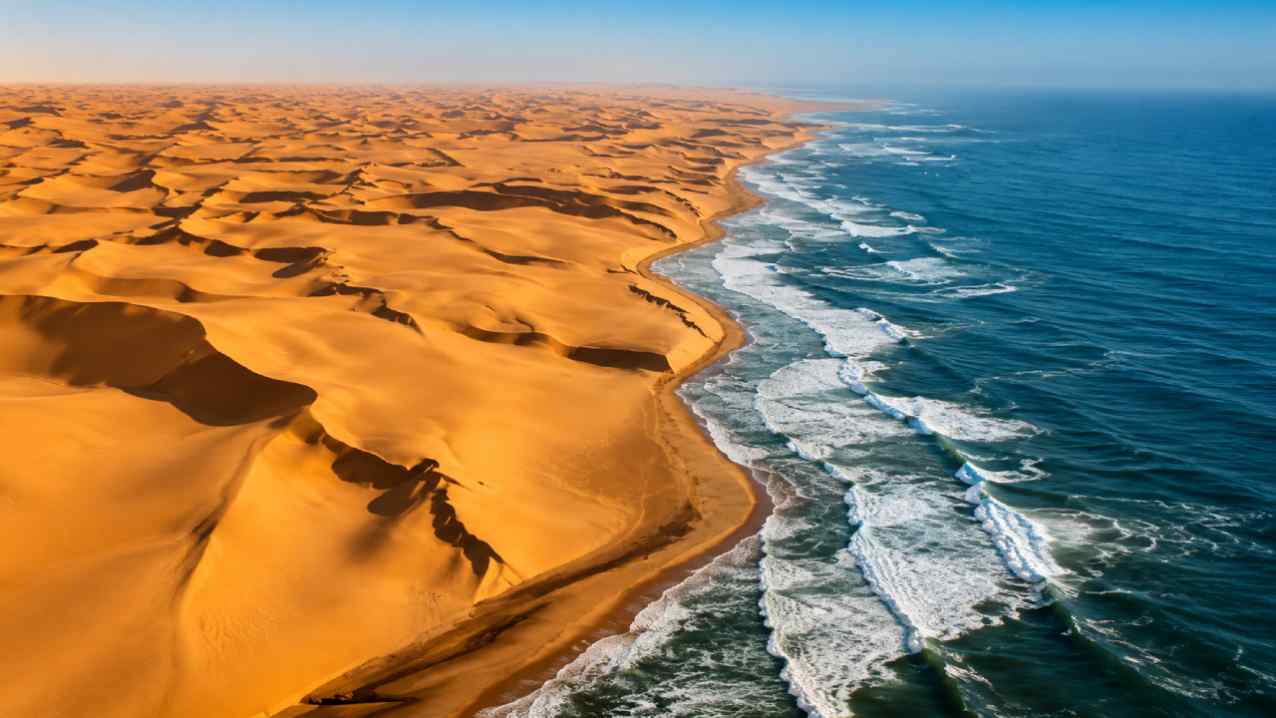
Round Rock Journal – When people imagine a desert, they usually picture endless sand dunes, scorching temperatures, and dry landscapes. However, Earth’s history tells a far more fascinating story. Many deserts Were Once Oceans, holding thriving marine ecosystems millions of years ago. This remarkable transformation is supported by fossil discoveries, sedimentary rock formations, and geological studies conducted across several continents. Instead of remaining unchanged, Earth’s surface has continuously evolved through tectonic activity, shifting climates, and rising or falling sea levels. Consequently, landscapes that now appear lifeless once supported rich underwater habitats. Understanding this transformation not only reveals our planet’s dynamic history but also reminds us that even the most familiar environments have extraordinary stories hidden beneath their surface.
Read Also: 6 New Smartphones Launching in August 2026 You Should Keep an Eye On
The Sahara Desert Was Not Always Dry
The Sahara Desert offers one of the most convincing examples of a landscape that changed dramatically over time. Today, it stretches across North Africa as the world’s largest hot desert. Nevertheless, millions of years ago, parts of the region lay beneath shallow seas. Later, during the African Humid Period around 11,000 to 5,000 years ago, the Sahara transformed into a green landscape filled with rivers, lakes, and grasslands. As a result, elephants, hippos, crocodiles, and countless other species thrived there. Ancient rock art discovered throughout the region also supports this evidence by depicting animals that could never survive in today’s harsh desert climate.
Fossils Reveal an Ancient Underwater World
Scientists rely on fossils to reconstruct Earth’s distant past. Throughout several desert regions, researchers have uncovered shells, corals, fish remains, and marine microorganisms preserved inside sedimentary rocks. These discoveries clearly demonstrate that many dry landscapes Were Once Oceans. Moreover, fossils often remain remarkably well preserved because desert climates slow down weathering and biological decay. Every fossil tells a story about ancient ecosystems, sea temperatures, and biodiversity from millions of years ago. Consequently, paleontologists continue exploring desert environments because they provide valuable clues about the evolution of life and the changing geography of our planet.
The Role of Plate Tectonics and Climate Change
Earth’s surface constantly changes through geological forces that operate over millions of years. Plate tectonics gradually move continents, creating mountains, opening oceans, and closing ancient seas. Meanwhile, long-term climate cycles influence rainfall, vegetation, and water availability. As rainfall decreased in certain regions, lakes gradually disappeared and fertile landscapes slowly became deserts. Furthermore, changing ocean currents and atmospheric circulation strengthened this drying process. Although these transformations occurred slowly, they completely reshaped entire ecosystems. Therefore, modern deserts represent the combined effects of geological activity and natural climate evolution rather than sudden environmental change.
Ancient Seas Left Their Mark Across the World
The Sahara is not the only desert with an underwater past. Similar geological evidence appears in the Atacama Desert of Chile, the Mojave Desert in the United States, and several arid regions across the Middle East and Australia. In each location, scientists have discovered marine fossils, limestone deposits, and sedimentary layers formed beneath ancient seas. These similarities reveal that Earth’s landscapes have experienced repeated cycles of flooding, drying, and continental movement. Consequently, deserts found on different continents often share surprisingly similar geological histories despite being separated by thousands of kilometers.
Read Also: Blessings Come Through Sincere Effort and Heartfelt Prayer
Why Sedimentary Rocks Matter
Sedimentary rocks serve as natural history books that preserve Earth’s environmental changes. Layer after layer records ancient rivers, lakes, coastlines, and ocean floors. Geologists carefully examine grain size, mineral composition, and fossil content to determine how each layer formed. For example, marine limestone indicates that seawater once covered the region, while sandstone may suggest ancient beaches or desert dunes. Because these formations accumulate gradually over time, they provide a reliable timeline of Earth’s geological evolution. As scientific technology improves, researchers continue uncovering new details hidden inside these remarkable rock layers.
What Ancient Deserts Teach Us About Earth’s Future
Studying landscapes that Were Once Oceans helps scientists understand how Earth’s climate has changed throughout history. Although ancient natural changes occurred over thousands or millions of years, they provide valuable context for interpreting modern environmental trends. Researchers compare fossil records, sediment layers, and climate models to better understand long-term planetary processes. Furthermore, these studies improve predictions about future ecosystem changes and water distribution. While today’s environmental challenges differ in many ways, Earth’s geological history demonstrates that landscapes constantly evolve through powerful natural forces.
A Hidden Story Beneath Every Grain of Sand
Every desert contains more than sand and rock. Beneath its surface lies an extraordinary record of vanished oceans, ancient wildlife, and dramatic environmental transformation. Scientific discoveries continue proving that many regions Were Once Oceans, reminding us that Earth’s appearance has never been permanent. This perspective encourages greater appreciation for geology, paleontology, and climate science. More importantly, it highlights how interconnected Earth’s natural systems have always been. As researchers uncover additional fossils and geological evidence, the hidden story beneath the world’s deserts becomes even richer, offering endless opportunities to learn about our planet’s remarkable past.