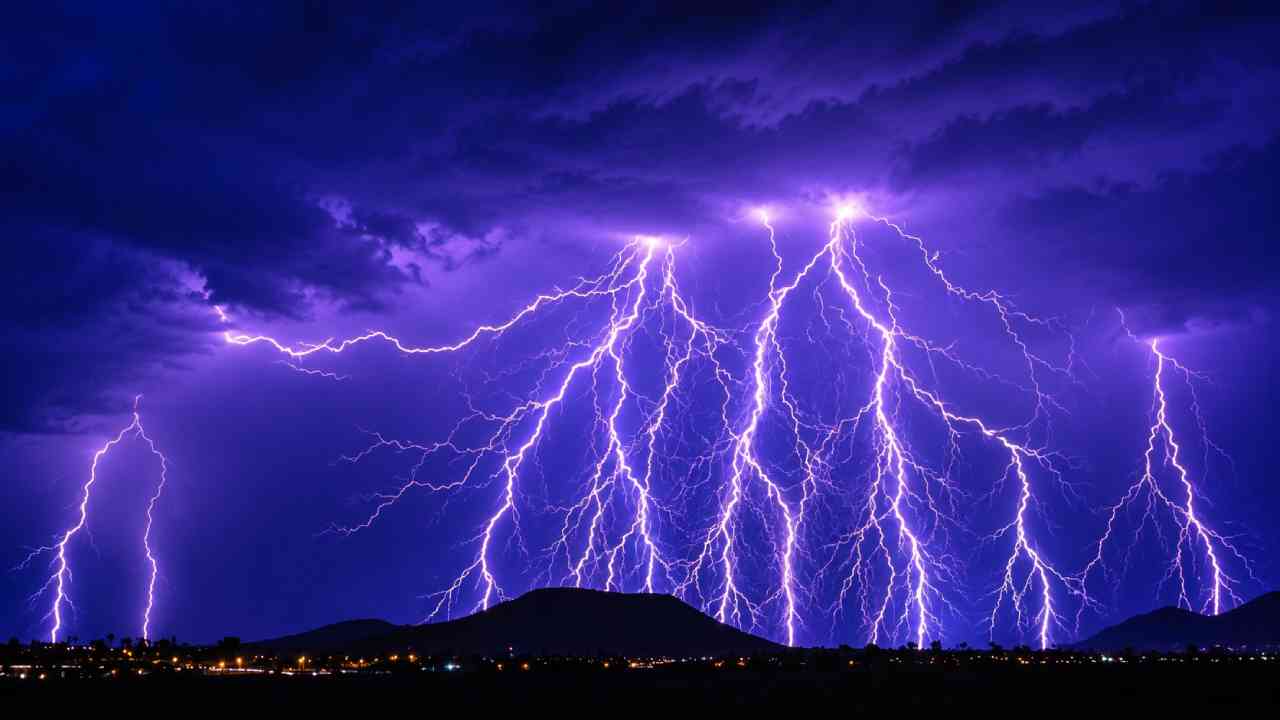
Round Rock Journal – Have you ever watched a storm and wondered why you see lightning before hearing the deep rumble of thunder? The answer comes down to a simple difference between light and sound. Lightning and thunder are part of the same electrical event. However, they reach our senses at very different times. Light travels at nearly 300,000 kilometers per second, so a lightning flash appears almost instantly from normal storm distances. Sound moves much more slowly through air, at roughly 343 meters per second under typical conditions. Therefore, thunder needs extra time to travel from the lightning channel to your ears. This difference creates the familiar pause between a bright flash and a sudden boom. In fact, that short delay can reveal useful information about how far away the lightning occurred. What feels like a dramatic trick of nature is actually an everyday demonstration of physics happening directly above us.
Read Also: CIMB Niaga Launches KKI Retail With QRIS Payments and No Annual Fee
Lightning and Thunder Begin With the Same Event
Although we experience them separately, lightning and thunder are closely connected. During a thunderstorm, electrical charges build within storm clouds. When the electrical difference becomes strong enough, a rapid discharge can occur within a cloud, between clouds, or between a cloud and the ground. We see that discharge as lightning. Meanwhile, the lightning channel heats the surrounding air extremely quickly. According to weather science, temperatures within the channel can become several times hotter than the surface of the Sun for a brief moment. As a result, nearby air expands rapidly. This sudden expansion creates a pressure wave that travels outward through the atmosphere. Eventually, we hear that wave as thunder. Therefore, thunder is not a separate event waiting to happen after the flash. Both effects originate almost together. The delay we notice happens during their journey toward us, which makes the storm a fascinating real-world example of how different forms of energy travel.
Light Is Incredibly Faster Than Sound
The numbers make the difference easier to understand. Light travels through a vacuum at approximately 299,792 kilometers per second. In comparison, sound moves through ordinary air at around 343 meters per second near room temperature. Although the exact speed of sound changes with atmospheric conditions, it remains dramatically slower than light. Imagine lightning occurring three kilometers away. The light covers that distance so quickly that our eyes perceive the flash almost immediately. The sound, however, may take close to nine seconds to reach us. Consequently, you see lightning long before the thunder arrives. This principle is not limited to thunderstorms. A similar effect can occur when watching fireworks from far away. You see the explosion before hearing its bang. Stadium events can produce a comparable delay between distant visual action and sound. Thunderstorms simply make this difference especially dramatic because lightning creates both an intense flash and a powerful acoustic wave.
You Can Estimate How Far Away Lightning Is
That delay can be used for more than satisfying curiosity. It can provide a rough estimate of the distance between you and a lightning event. After seeing a flash, count the seconds until you hear thunder. Because sound travels roughly one kilometer every three seconds, dividing the number of seconds by three gives an approximate distance in kilometers. For example, if you count nine seconds between the flash and thunder, the lightning occurred roughly three kilometers away. However, this calculation should be treated as an estimate rather than a precision measurement. Wind, temperature, terrain, and the shape of the lightning channel can affect how sound travels. More importantly, counting seconds is not a substitute for lightning safety. If thunder is audible, lightning may already be close enough to pose a danger. The calculation is an interesting educational tool, but seeking proper shelter remains far more important than determining an exact distance.
Why Thunder Sometimes Cracks and Sometimes Rumbles
Thunder does not always sound the same. Sometimes it arrives as a sharp crack. At other times, it rolls across the sky for several seconds. Distance plays an important role in this difference. Nearby lightning can produce an intense crack because the sound reaches you with less atmospheric distortion. Distant thunder, meanwhile, often sounds softer and longer. However, distance is not the only explanation. A lightning channel can stretch across a large section of the sky. Sound from different parts of that channel must travel different distances before reaching you. Therefore, those sound waves arrive at slightly different times. Reflections from clouds, hills, buildings, and other surfaces can further change what you hear. Together, these effects create the familiar rolling character of thunder. This is why two lightning strikes can produce noticeably different sounds. The atmosphere, landscape, lightning geometry, and your position all influence the final experience.
Weather Conditions Can Change the Way Thunder Travels
The speed and direction of sound are influenced by atmospheric conditions. Temperature is one important factor because sound generally travels faster through warmer air than colder air. Wind can also affect how thunder propagates across an area. In addition, layers of air at different temperatures may bend sound waves as they move through the atmosphere. Consequently, people at similar distances from a storm may experience thunder differently. One person might hear a strong rumble, while someone elsewhere may hear something weaker. Terrain also matters. Mountains, valleys, forests, and buildings can reflect or absorb parts of the sound. These variations help explain why thunder can sometimes seem unusually loud or surprisingly distant. Nevertheless, the fundamental principle remains unchanged: light reaches us vastly faster than sound. Atmospheric conditions may alter the character and timing of thunder slightly, but they cannot eliminate the enormous speed difference that allows us to see the lightning flash first.
Why Lightning Can Be Visible Without Audible Thunder
Sometimes you may see lightning on the horizon yet hear no thunder at all. This does not mean the lightning occurred without producing thunder. Instead, the storm may simply be too far away for the sound to reach you clearly. Light can travel enormous distances through the atmosphere and remain visible, especially at night. Thunder is different. As sound waves spread outward, their energy becomes weaker. The atmosphere, terrain, wind, and other environmental factors can reduce the sound further. Eventually, thunder may become too faint for human ears to detect. Distant flashes are sometimes informally called “heat lightning,” especially on warm evenings. However, they are usually ordinary lightning from a thunderstorm located far beyond the observer. Understanding this distinction turns a mysterious horizon flash into something easier to explain. The storm is still producing both lightning and thunder; you are simply receiving the visual signal from much farther away.
Read Also: When Motivation Fades, These Small Habits Keep You Moving
The Flash-to-Bang Delay Is a Simple Physics Lesson
One of the most interesting things about thunderstorms is how clearly they demonstrate basic science. You do not need laboratory equipment to observe the difference between the speed of light and sound. You only need a distant storm and a safe place indoors. First comes the flash. Then, several seconds later, the sound arrives. The same concept appears in many other situations. Fireworks provide perhaps the easiest comparison because distant spectators often notice the visual explosion before its sound. Construction work, sporting events, and other distant activities can create similar delays. However, lightning makes the lesson particularly memorable because the contrast is so dramatic. In my view, this is what makes everyday science engaging. A concept that might seem abstract in a textbook suddenly becomes something you can observe directly. Nature turns a basic physics principle into a spectacular demonstration involving light, heat, electricity, pressure, and sound.
Thunder Is Also an Important Safety Signal
Understanding the science behind thunder should also change how we respond to it. Thunder is evidence that lightning has occurred within audible range, so it should never be treated as background noise during an outdoor activity. If you hear thunder, move toward a substantial enclosed building or an appropriate enclosed vehicle rather than remaining in an exposed area. Avoid waiting for rain to become heavy before seeking shelter because lightning can occur away from the heaviest rainfall. Likewise, do not rely on counting the seconds between a flash and thunder to decide whether conditions are safe. The flash-to-bang method is useful for understanding distance, but thunderstorms can change quickly. Safety guidance from local weather authorities should always take priority. This practical lesson adds another layer to the science. Knowing why we see lightning first is fascinating, but recognizing what thunder communicates can be even more valuable when a storm approaches.
A Familiar Storm Reveals an Extraordinary Piece of Science
The next time a storm rolls across the horizon, the sequence may feel more meaningful. A flash appears first because light travels at an extraordinary speed. Thunder follows because sound requires much more time to cross the same distance. Behind those few seconds lies a remarkable chain of events involving electrical discharge, extreme heating, expanding air, and traveling pressure waves. Moreover, the delay can help us roughly understand the storm’s distance. The changing sound of thunder can also reveal how complex its journey through the atmosphere can be. Yet perhaps the most interesting lesson is how accessible this science remains. You can see lightning, hear thunder, and observe a fundamental principle of physics without specialized equipment. Everyday experiences often contain more science than we realize. Sometimes, all it takes is a bright flash across a dark sky to remind us how extraordinary familiar natural events can be.