Round Rock Journal – Memory Decay Theory explains why information fades from our mind over time, even when it once felt clear and meaningful. At first, this idea may sound discouraging; however, it actually reveals how the brain naturally manages information. As humans, we are constantly exposed to new knowledge, so the brain must filter and prioritize what to keep. Therefore, forgetting is not always a failure, but rather a necessary process. In everyday life, many people experience this when they forget names, facts, or lessons shortly after learning them. Moreover, this pattern is common across all age groups and learning environments. As a result, understanding this theory can help us improve how we learn and remember. In addition, it provides insight into how habits influence memory strength. Ultimately, it encourages us to approach learning more strategically and realistically.
“Read Also: Israel Hit by Iranian Missiles After Trump Speech, Tensions Escalate Overnight“
Understanding the Core of Memory Decay Theory
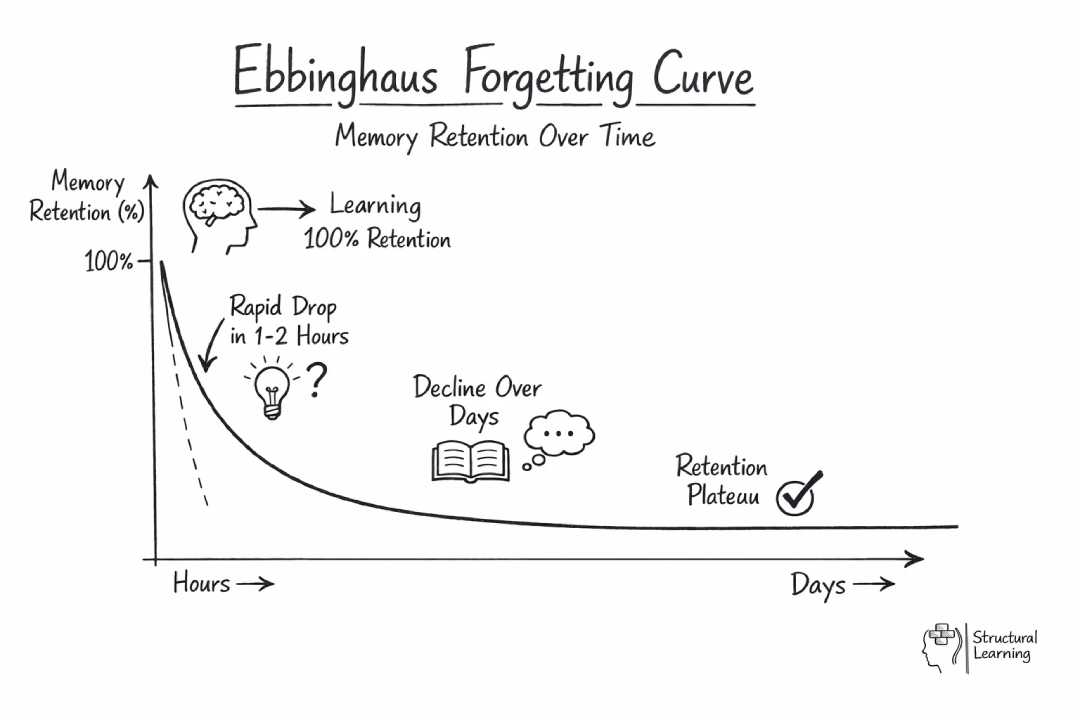
The Memory Decay Theory suggests that memories weaken when they are not used or reinforced. In other words, the neural connections that store information gradually lose strength over time. This idea was first studied by Hermann Ebbinghaus, who introduced the concept of the forgetting curve. As a result, research shows that people can forget a significant portion of new information within just a few days. However, this does not mean the brain is inefficient. Instead, it reflects how the brain optimizes space for more relevant information. Moreover, this selective process allows us to focus on what truly matters. Therefore, memory decay is a natural and logical process. In addition, it highlights the importance of reinforcement in learning. Consequently, active engagement becomes essential for memory retention.
Why We Forget Information So Quickly
There are several reasons why forgetting happens faster than expected. First, lack of repetition causes the brain to treat information as unimportant. In addition, distractions and multitasking reduce focus during the learning process. As a result, memories are not stored deeply. Moreover, emotional connection plays a role; information without meaning is easier to forget. From a personal perspective, we often remember experiences rather than facts because emotions strengthen memory retention. Therefore, forgetting is not random but influenced by how we interact with information. Furthermore, stress and fatigue can weaken concentration during learning. Consequently, mental state significantly affects memory performance. Ultimately, effective learning requires both attention and emotional engagement.
The Role of the Forgetting Curve in Daily Life
The forgetting curve illustrates how memory declines rapidly after learning something new. Initially, retention is high, but it drops sharply within hours or days. However, the curve can be altered through consistent review. In practical terms, this means revisiting information before it fades completely. For example, students who review notes regularly tend to remember more than those who cram once. As a result, repetition becomes a key factor in long-term retention. Moreover, timing plays an important role in reinforcing memory. Therefore, reviewing at the right intervals can improve efficiency. In addition, understanding this curve helps individuals plan better study habits. Consequently, learning becomes more structured and effective. Over time, this approach leads to stronger and more reliable memory.
How Repetition Slows Down Memory Decay
Repetition is one of the most effective ways to combat memory decay. When information is repeated, the brain strengthens its neural pathways. As a result, the memory becomes more stable and easier to recall. However, not all repetition is equally effective. Spaced repetition, which involves reviewing material at increasing intervals, works better than repeating everything at once. Therefore, this method aligns with how the brain naturally processes information. In addition, it prevents cognitive overload and improves retention. Moreover, this strategy has been widely supported by cognitive science research. From my perspective, it is one of the simplest yet most powerful learning tools. Ultimately, repetition transforms temporary knowledge into long-term memory.
Emotional Connection Strengthens Memory Retention
Interestingly, emotions play a crucial role in memory retention. Information tied to feelings is often remembered longer than neutral data. For instance, people rarely forget meaningful events, even after many years. This happens because emotions activate deeper cognitive processing. As a result, the brain prioritizes emotionally significant memories. Moreover, emotional engagement makes learning more enjoyable and memorable. Therefore, adding storytelling or personal relevance to learning can improve retention. In modern education, this approach is increasingly used to make lessons more engaging. In addition, emotional memory tends to be more vivid and detailed. Consequently, combining logic with emotion creates a stronger learning experience. Ultimately, meaningful learning is more effective than mechanical memorization.
“Read Also: Motivational Anchors in the Subconscious Mind: The Key to Consistency Without Coercion“
Practical Techniques to Overcome Forgetting
To overcome memory decay, several practical techniques can be applied. First, use spaced repetition to review information regularly. In addition, practice active recall by testing yourself instead of passively reading. Furthermore, breaking information into smaller chunks makes it easier to process. As a result, learning becomes more efficient and less overwhelming. Moreover, combining visual and auditory elements can enhance understanding. Therefore, using multiple learning methods creates stronger memory connections. In addition, maintaining a consistent study schedule improves retention. Consequently, discipline plays a key role in memory development. From experience, small habits often lead to big improvements. Ultimately, effective strategies make learning more sustainable.
The Impact of Modern Lifestyle on Memory
Modern lifestyles also influence how we remember and forget. With constant digital distractions, attention spans are becoming shorter. As a result, people may struggle to retain information effectively. In addition, reliance on technology reduces the need to memorize details. However, this does not mean memory skills are lost. Instead, it highlights the need for intentional learning habits. Moreover, excessive screen time can affect cognitive focus. Therefore, balancing digital use with mindful learning is essential. In addition, taking breaks can help refresh mental capacity. Consequently, a balanced lifestyle supports better memory performance. Ultimately, awareness is the first step toward improvement.
Why Memory Decay Theory Matters Today
Memory Decay Theory is highly relevant in today’s fast-paced world. As information continues to grow, the ability to retain knowledge becomes more valuable. Therefore, understanding how memory works allows individuals to learn smarter, not harder. Moreover, this theory encourages a more compassionate view of forgetting. Instead of seeing it as a weakness, we can treat it as a natural process. In addition, it empowers people to improve their learning strategies. Consequently, knowledge becomes more accessible and manageable. From a broader perspective, this understanding supports lifelong learning. Ultimately, applying these insights can lead to more effective and meaningful education.